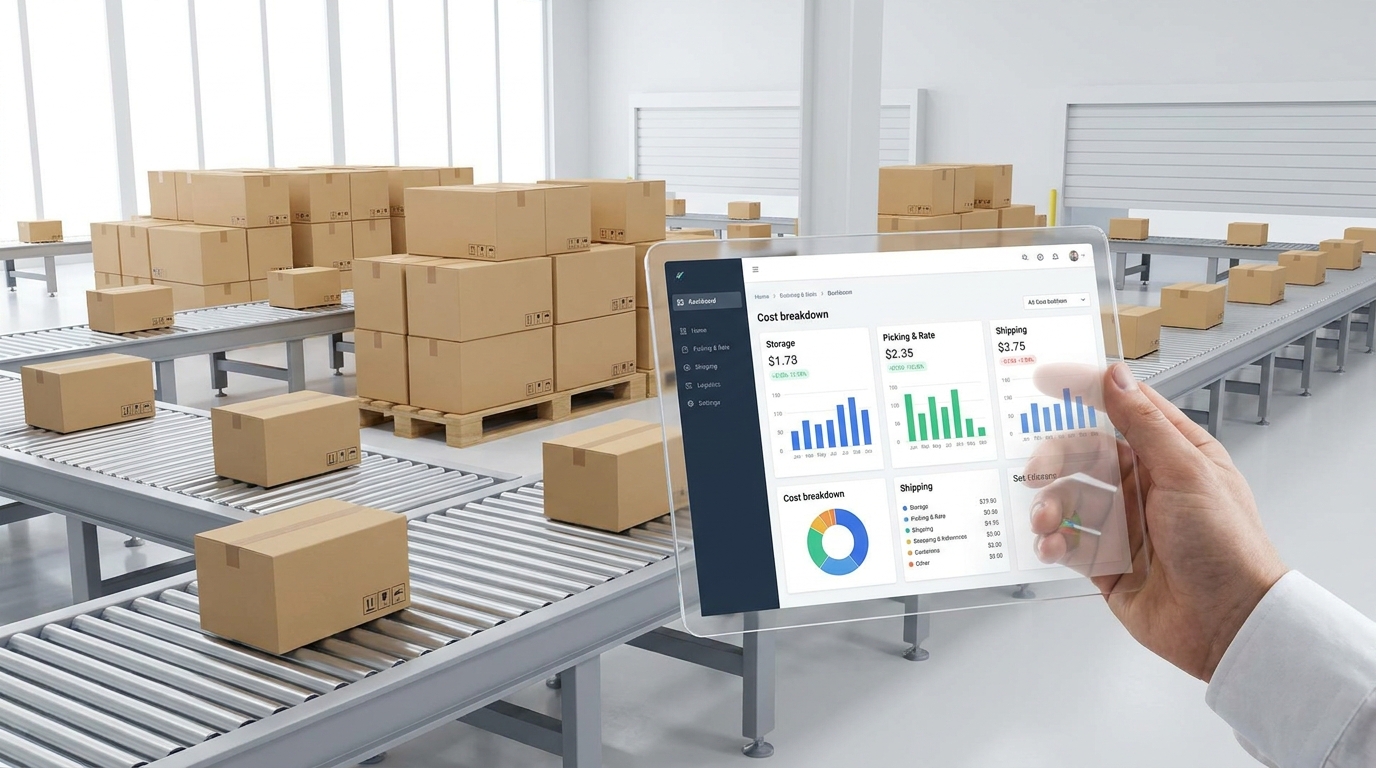
You’ve built a thriving ecommerce brand, orders are rolling in, and then it happens — a customer in Germany, another in Australia, and a third in Canada all place orders on the same day. Exciting? Absolutely. Overwhelming? It can be, if you don’t have a solid international ecommerce fulfillment strategy in place. Cross-border shipping comes with unique challenges: customs paperwork, duties and taxes, carrier selection, and delivery expectations that vary by country. But with the right approach, shipping globally doesn’t have to be a headache. This guide walks you through everything you need to know to fulfill international orders with confidence.
What Is International Ecommerce Fulfillment?
International ecommerce fulfillment is the process of storing, picking, packing, and shipping products to customers located outside your home country. It involves much more than just slapping a foreign address on a package. It requires an understanding of customs regulations, international carrier networks, landed costs, and destination-country compliance rules.
At its core, cross-border fulfillment is about bridging the gap between where your products are and where your customers are — efficiently, affordably, and reliably. Whether you’re shipping a handful of international orders per month or scaling into a global operation, the fundamentals remain the same.
For a broader look at how fulfillment works end-to-end, check out this complete guide to ecommerce fulfillment before diving into the cross-border specifics.
Why Cross-Border Ecommerce Is Worth the Effort
The global ecommerce market is massive and still growing. According to recent estimates, cross-border ecommerce is expected to reach over $7.9 trillion by 2030. That’s not a niche opportunity — it’s a mainstream revenue channel that brands of all sizes are tapping into.
Here’s why expanding internationally makes sense:
- Larger total addressable market: Domestic markets have ceilings. Global markets don’t.
- Reduced seasonality risk: Holidays and peak seasons vary by country, smoothing out your revenue curve.
- Competitive advantage: Many small and mid-size brands haven’t cracked international shipping yet — giving early movers a head start.
- Brand credibility: A global customer base signals legitimacy and scale.
The barrier to entry has also dropped significantly. With experienced third-party logistics (3PL) providers and better carrier integrations, brands can offer international shipping without building their own global infrastructure.
The Biggest Challenges in International Ecommerce Fulfillment
Before jumping into solutions, it’s worth understanding why cross-border fulfillment trips up so many ecommerce businesses. Awareness is the first step to avoiding costly mistakes.
Customs and Import Regulations
Every country has its own customs rules, and they change regularly. Products that ship freely within the US may be restricted, taxed heavily, or outright prohibited in other countries. Incorrectly completed customs forms can delay shipments, trigger inspections, or result in packages being returned or destroyed.
You’ll need accurate Harmonized System (HS) codes for every product you ship internationally. These codes determine duty rates and help customs officers classify your goods correctly.
Duties, Taxes, and Landed Costs
One of the most common international fulfillment headaches is unexpected costs at the destination. Customers who didn’t anticipate paying import duties often refuse delivery or demand refunds — both of which hurt your bottom line.
There are two main models for handling duties:
- DDU (Delivered Duty Unpaid): The customer pays duties upon delivery. This can cause frustration and abandoned shipments.
- DDP (Delivered Duty Paid): Your store collects duties at checkout. More customer-friendly, but requires more upfront calculation.
Understanding the true landed cost — product cost, shipping fees, duties, taxes, and handling — is essential to pricing your international orders profitably.
Shipping Costs and Dimensional Weight
International shipping rates can be eye-watering if you don’t understand how carriers price their services. Dimensional (DIM) weight pricing means that large, light packages can cost as much to ship as heavy ones. If you’re shipping bulky or lightweight products internationally, this can seriously erode your margins.
We’ve covered this topic in detail in our guide on volumetric weight for global sellers — a must-read before you set your international shipping rates. You should also explore strategies to lower shipping costs without changing your product to protect your margins.
Delivery Times and Customer Expectations
International shipping takes longer than domestic. That’s a given. But customers increasingly expect fast, transparent delivery even for cross-border orders. Being upfront about realistic delivery windows — and providing tracking — is critical to managing expectations and reducing support inquiries.
Returns and Reverse Logistics
International returns are complicated and expensive. Without a clear returns policy and a cost-effective process, you risk both customer dissatisfaction and mounting reverse logistics costs. Planning your international returns and exchanges strategy before you scale globally can save you significant headaches later.
Key Components of a Successful International Fulfillment Strategy
Now that you know the challenges, let’s talk solutions. Building a robust international ecommerce fulfillment strategy involves several interconnected decisions.
1. Choose the Right Fulfillment Model
There are three primary models for fulfilling international orders:
- Ship from your home country: All orders ship from one central location. Simpler to manage but slower and potentially more expensive for distant customers.
- Use international fulfillment centers: Store inventory in warehouses closer to your major international markets. Faster delivery, lower last-mile costs, but more complex inventory management.
- Partner with a global 3PL: Outsource your fulfillment to a provider with international reach. This is often the most scalable option for growing brands.
For small and mid-size brands just starting to ship internationally, shipping from a strategically located US warehouse is often the smartest first step. An East Coast fulfillment center offers excellent proximity to European markets, while a West Coast location like Los Angeles is ideal for shipping to Asia-Pacific.
2. Master Customs Documentation
Accurate customs documentation is non-negotiable. For most international shipments, you’ll need:
- Commercial invoice: Details the transaction, including product descriptions, quantities, and values.
- Packing list: An itemized list of what’s in the package.
- HS codes: Harmonized System codes for proper product classification.
- Certificate of origin: May be required for certain trade agreements.
- Export licenses: Required for specific controlled goods.
Errors in any of these documents can cause customs delays that frustrate your customers and complicate your operations. Working with a knowledgeable 3PL or freight forwarder helps ensure your paperwork is always accurate.
3. Calculate and Communicate Landed Costs
Surprises at delivery destroy customer trust. Invest in a landed cost calculator — either built into your ecommerce platform or through a third-party tool — to display the full cost of a purchase to international customers at checkout.
This transparency reduces cart abandonment, minimizes delivery refusals, and builds long-term customer loyalty. It also helps you price your products correctly for each market.
4. Select the Right International Carriers
Not all carriers are created equal when it comes to international shipping. Your choice of carrier affects delivery speed, reliability, cost, and customs handling. Here are the main options:
- USPS (via First-Class Package International or Priority Mail International): Affordable for lighter packages but slower and less trackable.
- UPS and FedEx: Faster, more reliable, better tracking, but more expensive.
- DHL: Excellent global network, especially in Europe and Asia. Often the best option for reliable international delivery.
- Regional carriers: For specific markets, regional carriers may offer better rates and service.
A good 3PL will have negotiated rates with multiple carriers, allowing you to choose the best option for each shipment based on destination, package size, and delivery urgency. Learn more about your options in our breakdown of ecommerce shipping methods.
5. Optimize Your Packaging for International Shipping
International shipments face more handling, more distance, and more environmental variability than domestic ones. Your packaging needs to be durable enough to survive the journey while being as lightweight and compact as possible to keep dimensional weight costs in check.
If you’re shipping clothing or apparel internationally, our guide on how to package clothes for shipping offers practical advice for protecting products while minimizing weight. You should also explore custom packaging options to elevate the unboxing experience even for international customers.
6. Manage Inventory Strategically
International demand is harder to forecast than domestic. You need smart inventory management to avoid stockouts or overstocking in specific markets. Using a 3PL with strong warehousing and inventory management capabilities gives you the visibility and control you need.
Real-time inventory tracking is especially important when you’re operating across multiple channels. An omnichannel fulfillment strategy ensures your inventory data stays accurate regardless of where your orders are coming from.
When to Work With a Global 3PL Partner
Many ecommerce businesses start international shipping by handling it in-house. That works at low volumes. But as your international order volume grows, the complexity — customs compliance, carrier management, returns processing, inventory allocation — quickly becomes unmanageable without dedicated infrastructure.
This is where a qualified fulfillment partner becomes essential. A global 3PL offers:
- Pre-negotiated carrier rates that individual brands can’t access
- Technology integrations with your ecommerce platform for seamless order flow
- Expertise in customs documentation and compliance
- Scalable warehouse space without long-term commitments
- Dedicated support for returns and exceptions
If you’re wondering whether the economics make sense, our guide on how much a 3PL costs breaks down the pricing structures and how to evaluate ROI. And if you’re a growing brand not sure when to make the leap, read our article on finding the best 3PL for small businesses.
What to Look for in an International Fulfillment Partner
Not every 3PL has true international fulfillment capabilities. When evaluating partners, ask these questions:
- Do they have experience with your destination markets? Country-specific knowledge matters for customs compliance.
- What carrier relationships do they have? A wider carrier network means more flexibility and better rates.
- Can they handle DDP (Delivered Duty Paid) shipping? This is a must for premium customer experience.
- Do they provide real-time tracking and visibility? You and your customers need to know where packages are at all times.
- How do they handle international returns? A clear reverse logistics process is essential for global operations.
- What technology do they use? Their WMS and order management system should integrate seamlessly with your storefront.
International Fulfillment Best Practices by Region
Different regions come with different fulfillment nuances. Here’s a quick overview of what to keep in mind for major international markets:
Europe
The European Union has harmonized many customs rules, but post-Brexit UK shipping adds complexity. EU VAT regulations require sellers above certain thresholds to register for VAT in each member state (or use the OSS scheme). GDPR compliance also affects how you handle customer data through your fulfillment systems.
Canada
Canada is one of the easiest international markets for US-based brands. The USMCA trade agreement reduces duties on many goods. However, provincial sales taxes and the Canadian dollar exchange rate require attention. Canada Post and major carriers provide reliable service across the country.
Australia and New Zealand
Australia has strict biosecurity regulations — certain materials and organic products may be prohibited. GST (Goods and Services Tax) applies to low-value imports. Despite being geographically distant, Australian consumers are accustomed to international purchasing and generally accept longer shipping windows.
Asia-Pacific
Asia-Pacific is a diverse region with vastly different regulations, tax structures, and consumer expectations by country. Japan, South Korea, and Singapore have high expectations for delivery quality. Southeast Asian markets are booming but require local payment method integration and careful customs navigation.
Reducing Shipping Costs on International Orders
International shipping costs are one of the biggest barriers to cross-border ecommerce profitability. Here are strategies to keep costs under control:
- Negotiate carrier rates: Volume discounts are available if you ship enough international packages — or partner with a 3PL that already has them.
- Optimize packaging dimensions: Smaller packages mean lower dimensional weight charges. Review your packaging strategy regularly.
- Use zone-skipping: Consolidate international shipments and inject them closer to the destination country before final delivery.
- Set international shipping thresholds: Free international shipping over a certain order value encourages larger orders that offset shipping costs.
- Evaluate ePacket for certain markets: For lighter packages to specific countries, ePacket (a US-China postal agreement option) can offer affordable tracked delivery.
Understanding how dimensional weight affects your shipping bill is especially important when scaling internationally. You can also explore our DIM weight breakdown to understand exactly how carriers calculate costs.
Technology Tools That Support International Fulfillment
The right technology stack makes international ecommerce fulfillment dramatically more manageable. Here’s what to have in place:
- Ecommerce platform integrations: Shopify, WooCommerce, and BigCommerce all support international shipping with the right apps and configurations.
- Landed cost calculators: Tools like Zonos or Avalara AvaTax calculate duties and taxes in real time at checkout.
- Multi-currency pricing: Display prices in the customer’s local currency to reduce friction and cart abandonment.
- Shipping management software: Platforms like ShipStation or EasyPost aggregate carrier options and streamline label creation.
- Returns management platforms: Loop Returns, AfterShip Returns, or similar tools simplify international return flows.
Technology works best when your fulfillment infrastructure is equally solid. Learn how smart fulfillment builds stronger ecommerce brands from the ground up.
Common International Fulfillment Mistakes to Avoid
Even experienced ecommerce operators make mistakes when going global. Here’s what to watch out for:
- Undervaluing customs declarations: Fraudulently undervaluing goods to reduce duties is illegal and can result in severe penalties.
- Ignoring prohibited items lists: Every country has goods that can’t be imported. Check before you ship.
- Forgetting about batteries and hazmat: Products containing lithium batteries face additional shipping restrictions internationally.
- Not localizing the checkout experience: Expecting foreign customers to pay in USD with no local payment options leads to high cart abandonment.
- Poor communication about delivery times: Be upfront about international shipping timelines to manage expectations.
- No international returns plan: Launching globally without a returns strategy leads to operational chaos and unhappy customers.
Is Your Fulfillment Operation Ready to Go Global?
Before you start taking international orders at scale, do an honest audit of your current fulfillment setup. Ask yourself:
- Do I have accurate HS codes for all my products?
- Can my current warehouse team handle customs documentation correctly?
- Are my packaging materials optimized for international transit?
- Do I have a carrier strategy that balances cost and delivery speed?
- Is my ecommerce platform configured for multi-currency, international shipping rates, and landed cost display?
- Do I have a clear international returns policy?
If the answer to several of these is “no,” it may be time to consider partnering with a dedicated fulfillment center before scaling your international efforts. You can also explore ShipCore’s full range of product fulfillment services to find the right solution for your brand.
Conclusion: Make International Ecommerce Fulfillment Work for Your Brand
Global expansion is one of the most powerful growth levers available to ecommerce brands — but only if you approach international ecommerce fulfillment with the right strategy, tools, and partners. The challenges are real: customs complexity, shipping costs, delivery expectations, and returns logistics can all derail even the best-intentioned global expansion.
But they’re not insurmountable. With a clear understanding of landed costs, accurate customs documentation, smart packaging, the right carrier mix, and a reliable fulfillment partner, you can deliver an excellent experience to customers in virtually any country on the planet.
The brands that win globally are the ones that treat international fulfillment as a strategic investment — not an afterthought. Whether you’re shipping your first international order or looking to scale a global operation, the foundation is the same: reliable systems, trusted partners, and a commitment to the customer experience.
Ready to take your fulfillment global? Get in touch with the ShipCore team today to discuss how we can support your international shipping strategy. Or explore our fulfillment blog for more expert insights on growing your ecommerce business.