If you’ve ever tried to get a straight answer on how much does a 3PL cost, you already know the frustration. Pricing pages are vague, quotes take days, and every provider seems to have a different way of charging you. The truth is, 3PL fulfillment pricing isn’t one number — it’s a layered structure of fees that depends on your product, order volume, storage needs, and the services you require. This guide breaks it all down so you can budget confidently and choose the right partner without surprises.
What Is a 3PL and What Does It Actually Do?
A third-party logistics provider (3PL) handles the physical side of your ecommerce business — warehousing your inventory, picking and packing orders, and shipping them to customers. Some 3PLs also manage returns, kitting, custom packaging, and freight coordination.
Instead of leasing warehouse space, hiring staff, and negotiating carrier contracts yourself, you outsource those operations to a partner who already has the infrastructure. The cost you pay is a combination of their overhead, labor, and margin — broken into multiple fee categories.
Understanding those categories is the first step toward answering the real question: what will this actually cost your business?
If you’re newer to the concept, our complete guide to 3PL fulfillment warehouses covers the fundamentals in detail before you dive into pricing.
The Core 3PL Pricing Components You Need to Know
Most 3PL providers charge across several distinct categories. Rarely is there a single all-in-one rate. Let’s walk through each one.
1. Receiving Fees
When your inventory arrives at the 3PL warehouse, they charge a fee to unload, inspect, count, and log it into their system. This is called a receiving fee.
Receiving fees are typically structured in one of three ways:
- Per pallet: $10–$35 per pallet received
- Per carton/box: $1–$5 per carton
- Per hour: $30–$60 per labor hour for receiving
If your supplier ships inconsistently — mixed SKUs in the same carton, unlabeled boxes, or pallets that aren’t floor-ready — expect higher receiving fees due to extra labor. Keeping your inbound shipments clean and organized can save real money here.
2. Storage Fees
This is what you pay to store inventory in the 3PL’s warehouse. Storage is typically billed monthly and charged by one of three units:
- Per pallet: $10–$40/month per pallet position
- Per cubic foot: $0.25–$1.00/cubic foot per month
- Per bin or shelf location: $1–$10/month per bin
The method matters. If your products are small and lightweight, cubic foot pricing may favor you. If you have large, dense items, per-pallet pricing could be more economical. Always ask how the 3PL measures and charges for storage before signing anything.
Long-term storage fees can also apply if inventory sits beyond a certain threshold — similar to how Amazon FBA handles aged inventory penalties. Plan your stock levels accordingly.
3. Pick and Pack Fees
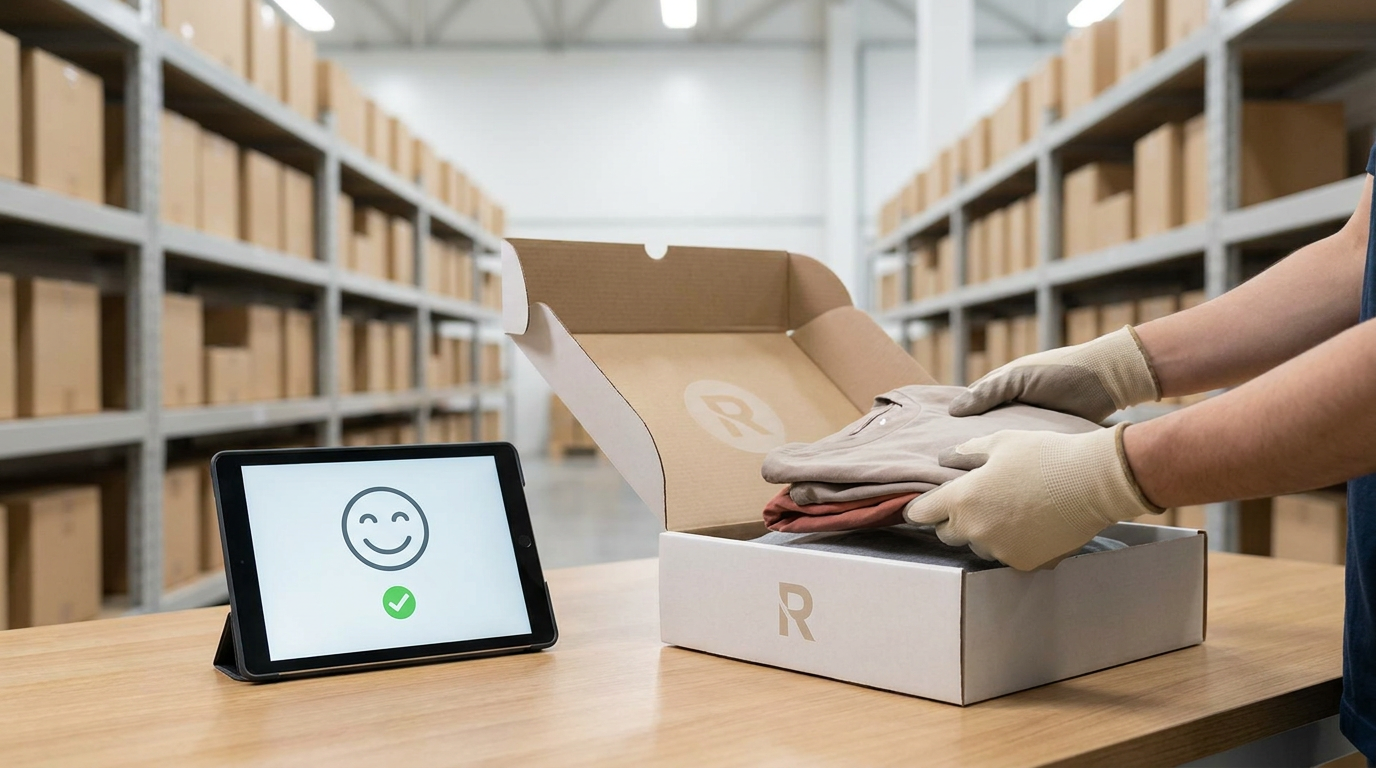
This is often the biggest variable in your monthly bill. Pick and pack fees cover the labor required to pull items from shelves, package them, and prepare orders for shipment.
Typical structures include:
- Per order fee: $1.50–$5.00 per order (base fee)
- Per item/unit fee: $0.25–$1.00 per additional item after the first
- Per insert fee: $0.10–$0.50 per marketing insert, packing slip, or promo card
So a simple one-item order might cost $2.00 to pick and pack. A three-item order could run $3.50–$5.00 depending on the provider’s pricing model. These fees add up fast at volume.
Learn more about how this process works in our pick and pack fulfillment overview, which explains the workflow and how pricing connects to operational complexity.
4. Packaging Materials
Most 3PLs provide basic packaging — poly mailers, plain boxes, tape, dunnage — and charge you for materials used. Rates vary by material type and size:
- Poly mailers: $0.10–$0.50 each
- Standard boxes: $0.50–$3.00 each depending on size
- Bubble wrap/air pillows: Often bundled or per-order
If you want custom branded packaging — printed boxes, tissue paper, stickers — you’ll either supply your own or pay a premium for the 3PL to source and store it. Custom packaging is a great brand experience but adds to per-order costs.
5. Shipping Costs
Shipping is usually the largest single line item on your fulfillment bill. Most 3PLs pass through carrier rates with a markup, or they negotiate bulk discounts and share a portion of the savings with you.
Shipping cost depends on:
- Package dimensions and weight (or dimensional weight, whichever is greater)
- Origin and destination zip codes
- Carrier selected (UPS, FedEx, USPS, DHL)
- Service level (ground, 2-day, overnight)
A 3PL with high order volume may have negotiated carrier discounts that are significantly better than what you’d get as a standalone merchant. That rate arbitrage can be a real financial benefit — and sometimes offsets other fees entirely.
Understanding how dimensional weight affects your shipping bill is critical when comparing 3PL options, especially for brands shipping lightweight or bulky products.
6. Returns Processing
Returns are often an afterthought in the pricing conversation — but they can cost more than you expect. Common charges include:
- Per return received: $2–$8 per return
- Inspection fee: $1–$3 per item inspected
- Restocking fee: Sometimes bundled, sometimes separate
If your return rate is high (common in fashion and apparel), this line item deserves careful attention. Our returns and exchanges services page outlines how a good 3PL handles reverse logistics efficiently.
7. Account and Setup Fees
Some 3PLs charge onboarding or setup fees to get your account configured, integrate with your ecommerce platform, and map your SKUs. These are typically one-time fees ranging from $0 to $500+.
Monthly account minimums are also common. If your order volume falls below a certain threshold, you may still owe a minimum monthly fee — often $250–$500. This matters a lot for smaller brands or those in seasonal businesses.
How Much Does a 3PL Cost? Real-World Estimates by Business Size
Now that you understand the individual fee components, let’s look at what monthly 3PL costs actually look like for different ecommerce businesses.
Early-Stage Brands (Under 200 Orders/Month)
At low order volumes, 3PL pricing can feel expensive relative to what you’re shipping. Expect to pay:
- Monthly storage: $50–$200
- Pick and pack: $300–$600
- Shipping (passed through): Varies by destination
- Account minimums: $250–$500
- Total estimated monthly cost: $600–$1,300+
At this volume, some brands find that fulfilling from home or a local co-packer is more economical. But if you’re ready to scale or lack the space, a 3PL focused on small business fulfillment can offer flexible pricing tiers that make outsourcing worthwhile earlier than you’d expect.
Growing Brands (200–1,000 Orders/Month)
This is the sweet spot where outsourcing typically starts paying for itself through time savings and operational efficiency.
- Monthly storage: $150–$600
- Pick and pack: $600–$3,000
- Shipping (passed through): Significant but often discounted
- Returns processing: $100–$400
- Total estimated monthly cost: $1,500–$6,000+
At this stage, the 3PL’s carrier discounts often start to offset their fees meaningfully. You should also be seeing gains in team bandwidth and customer experience consistency.
Established Brands (1,000+ Orders/Month)
At higher volumes, 3PL pricing becomes more negotiable. You have leverage, and providers may offer custom rate cards, volume discounts, and dedicated account management.
- Monthly storage: $500–$3,000+
- Pick and pack: $3,000–$15,000+
- Shipping: Heavily discounted rates at this volume
- Returns and special services: Variable
- Total estimated monthly cost: $8,000–$30,000+
Brands at this stage often benefit from strategic warehouse placement — such as using an East Coast fulfillment center or a California 3PL warehouse — to reduce transit times and regional shipping costs.
Hidden Fees That Inflate Your 3PL Bill
The biggest source of budget shock for new 3PL clients isn’t the base fees — it’s the hidden or overlooked charges buried in the contract. Here are the most common ones to watch for.
Account Minimums and Inactivity Fees
If you have a slow month, you still may owe a minimum billing amount. Some 3PLs charge inactivity fees if orders drop below a threshold for an extended period.
Special Handling Fees
Fragile products, oversized items, or those requiring special storage conditions (temperature control, hanging garments, etc.) often incur extra handling charges. Always disclose your product type upfront.
Carrier Surcharges
Fuel surcharges, residential delivery fees, address correction fees, and peak season surcharges from carriers like UPS and FedEx get passed through to you. These are real costs — and they fluctuate. Understanding how to lower shipping costs strategically can help offset some of these unavoidable charges.
Software and Integration Fees
Some 3PLs charge monthly fees for their warehouse management system (WMS) or for connecting to your Shopify, WooCommerce, or other platform. Ask upfront whether integrations are included.
Labeling and Compliance Fees
If your products need FBA prep, retail compliance labels, or barcode relabeling, expect per-unit fees of $0.10–$0.50+ per item. For high-SKU brands, this adds up quickly.
3PL Pricing Models: Which One Works Best for You?
Not all 3PLs charge the same way. Understanding the major pricing models helps you identify which provider structure aligns with your business.
À La Carte (Itemized) Pricing
Each service is billed separately — receiving, storage, pick and pack, packaging, shipping. You pay for exactly what you use. This model offers transparency and flexibility but can feel complex to manage month to month.
Bundled or All-In Pricing
Some 3PLs offer a flat per-order rate that bundles multiple fees together. This simplifies budgeting but may result in overpaying if your orders are simple.
Hybrid Pricing
A mix of flat monthly fees (for storage and account management) plus per-order fees for fulfillment activity. This is the most common model and gives both parties predictability.
What Factors Drive Your Total 3PL Cost Up or Down?
Beyond the fee categories, several factors specific to your business will determine where on the pricing spectrum you land.
SKU Count
More SKUs mean more bin locations, more complex picking, and more inventory management overhead. High-SKU catalogs typically cost more to fulfill than a simple one- or two-product business.
Product Size and Weight
Bulky, heavy, or irregularly shaped items require more storage space, more labor to handle, and cost more to ship. If you ship items where lightweight but bulky packaging is a challenge, this is a major pricing factor.
Order Complexity
Multi-item orders, kitted bundles, subscription boxes, or orders with custom inserts all require more labor and drive up pick and pack costs per order.
Seasonality
If your business spikes during Q4 or specific campaign periods, you may face surge pricing or capacity constraints. A good 3PL partner will help you plan for peak periods without catastrophic cost increases.
Location of Fulfillment Center
A warehouse near your customer base means lower shipping zones and faster delivery. If your customers are concentrated on the East Coast, a New Jersey fulfillment center could reduce your average shipping cost meaningfully compared to fulfilling from the Midwest or West Coast.
Is a 3PL Worth the Cost? The ROI Equation
The real question isn’t just “how much does a 3PL cost” — it’s whether the cost is worth it relative to what you get back.
When you outsource fulfillment, you typically gain:
- Time: Hours per week that previously went to packing orders can go toward marketing, product development, or sales
- Scalability: A 3PL can absorb a 10x order spike without you hiring temporary staff
- Carrier discounts: Volume shipping rates you couldn’t access independently
- Customer experience: Faster shipping, professional packaging, and reliable tracking
- Infrastructure: No lease, no warehouse equipment, no staff management
For apparel and fashion brands specifically, the ROI case is even stronger. Our guide on when to outsource apparel fulfillment outlines the key inflection points where DIY fulfillment starts costing you more than a 3PL would.
The math changes for every business, but most growing ecommerce brands find that a 3PL pays for itself once they cross 150–250 orders per month — sometimes earlier when you factor in labor and time costs honestly.
How to Compare 3PL Quotes Accurately
When you request quotes from multiple 3PLs, don’t just compare the per-order rate. Use a consistent framework:
- Define your order profile: Average order size, SKU count, product dimensions, weight, and monthly volume
- Request fully itemized quotes: Every fee category, including account minimums and surcharges
- Ask about shipping rate examples: Request sample shipping costs for your most common origin-to-destination scenarios
- Clarify contract terms: Minimum commitments, exit clauses, and rate escalation policies
- Evaluate the technology: Does their WMS integrate with your platforms? Are there fees for that?
- Check for hidden fees: Special handling, labeling, kitting, peak surcharges
Building a simple spreadsheet model with your order volume applied to each quote will reveal the true cost difference far more clearly than comparing headline rates.
For a deeper look at how to evaluate potential partners, our guide to finding the best 3PL for small businesses covers what to look for beyond just price.
Questions to Ask Before Signing with a 3PL
Price is just one dimension of the decision. Before committing, get clear answers to these:
- What is your average order error rate?
- How do you handle damaged or lost inventory?
- What does your onboarding process look like?
- How do you communicate when there’s a problem?
- Do you have experience with my product category?
- What carrier options do you offer and at what rates?
- Can you support same-day or next-day shipping if needed?
- Do you offer omnichannel fulfillment for retail or wholesale orders?
A 3PL that answers these confidently and transparently is worth more than one offering the lowest rate but providing vague answers.
Conclusion: Budgeting for 3PL Fulfillment With Confidence
So, how much does a 3PL cost? The honest answer is: it depends — but now you have the framework to find out for your specific business. From receiving and storage to pick and pack, shipping, and returns, each fee category has a range and a logic behind it. The key is understanding the full picture before you commit.
For most growing ecommerce brands shipping 200+ orders per month, a 3PL is not just a cost — it’s a strategic investment that frees up time, improves customer experience, and creates the operational foundation for real scale.
If you’re ready to explore what fulfillment would actually cost for your business, get in touch with our team at Shipcore Fulfillment. We’ll walk through your order profile and give you a transparent, itemized quote — no vague answers, no hidden surprises. You can also explore our ecommerce fulfillment services to see exactly what we offer and how we price it.