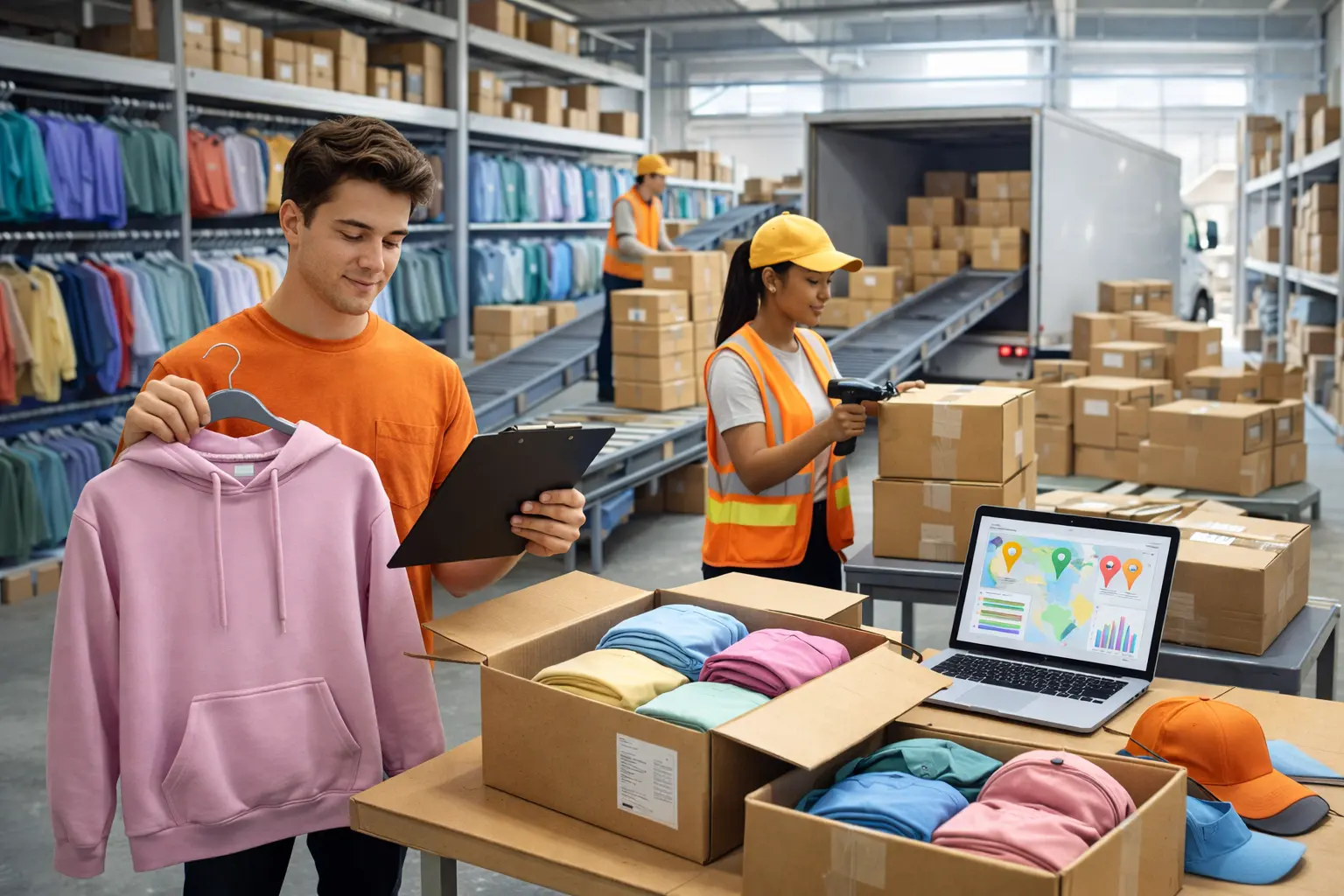
There’s a moment every growing clothing brand hits. Orders are climbing, your spare room looks like a distribution center, and you’re spending more time folding shirts and printing labels than designing your next collection. The question isn’t whether to outsource apparel fulfillment—it’s whether you’ve already waited too long.
Deciding when to move from in-house packing to a third-party logistics partner is one of the most consequential operational decisions an apparel brand makes. Move too early and you pay for capacity you don’t need. Move too late and you burn out, ship sloppy packages, and lose customers to preventable mistakes.
This guide helps clothing brand founders identify the right moment to outsource, understand what to expect from a 3PL partnership, and avoid the mistakes that make transitions harder than they need to be.
The Real Cost of Doing Fulfillment Yourself
Most apparel brands start with self-fulfillment and it makes sense. When you’re shipping five or 10 orders a day, you can fold each garment with care, tuck in a handwritten note, and walk the package to the post office. It’s manageable, personal, and free—or so it seems.
The hidden costs of DIY fulfillment become visible as volume increases:
Founder Time
Your time is your most expensive resource, and it’s the one most founders miscalculate. If you spend three hours a day on fulfillment at even a modest valuation of your time, that’s $500-$1,500 per week not spent on product development, marketing, wholesale relationships, or brand strategy.
Every hour spent packing boxes is an hour not spent on activities that actually grow revenue.
Error Rates
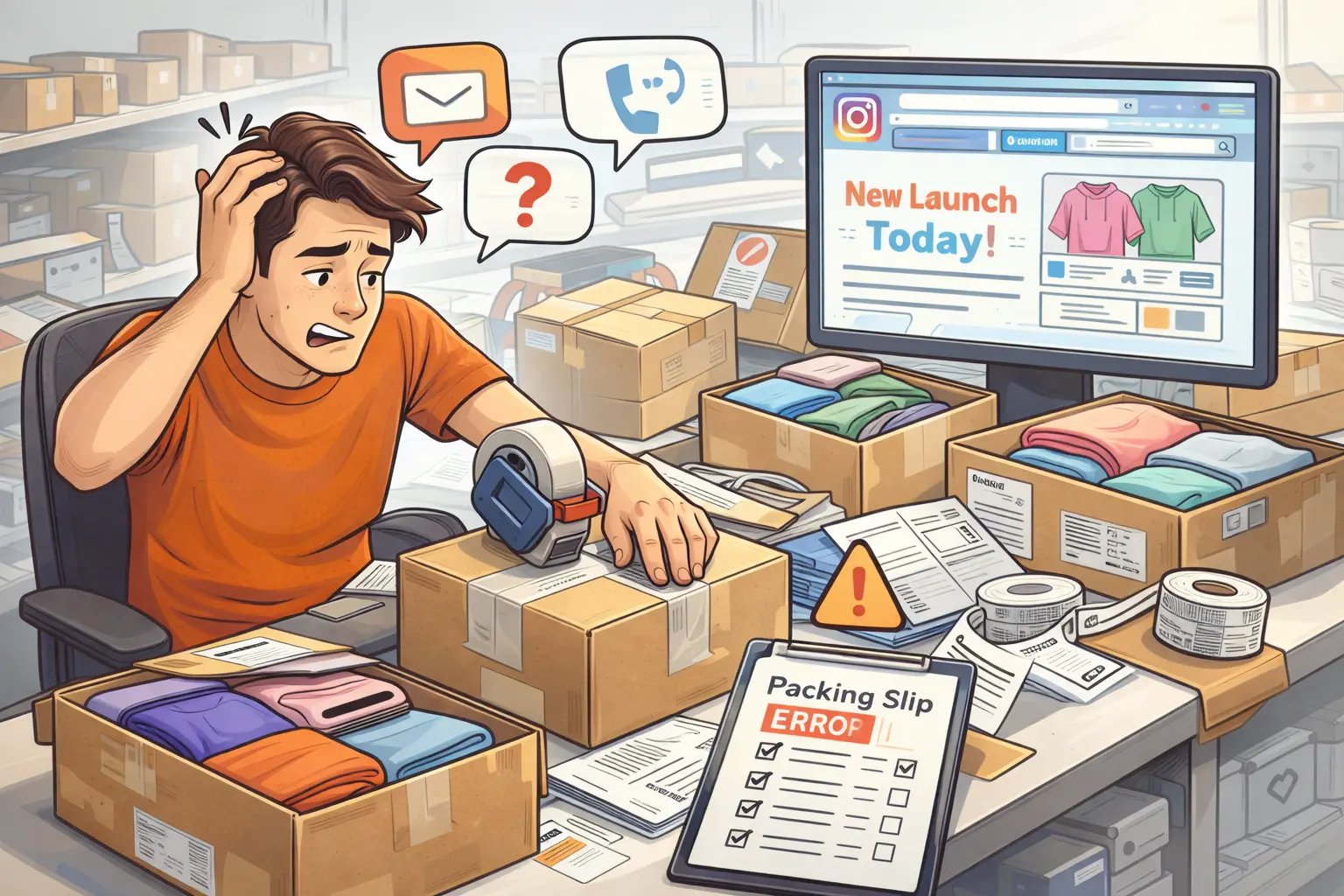
When one person packs 20 orders, accuracy stays high. When you’re rushing through 100 orders while answering customer emails and managing an Instagram launch, mistakes multiply:
- Wrong size shipped
- Missing items in multi-piece orders
- Packing slips mismatched to orders
- Shipping labels swapped between packages
Each error costs $15-$25 in re-shipping, plus the customer experience damage that doesn’t show on a spreadsheet.
Inconsistent Packaging Quality
Monday’s orders get tissue paper, a thank-you card, and careful folding. Friday’s orders—after a week of 12-hour days—get a quick fold and a poly mailer. Customers notice. Inconsistent clothing packaging erodes the brand experience you’ve worked to build.
Shipping Cost Disadvantage
Shipping one or two packages a day with USPS or UPS means you’re paying retail rates. A fulfillment partner shipping thousands of packages daily negotiates volume discounts that can reduce your per-package shipping costs by 15-30%.
Space Constraints
Inventory storage, packaging supplies, a packing station, and staging areas for outbound shipments consume space fast. Brands operating from home or small offices hit physical limits well before they hit demand limits.
Seven Signs It’s Time to Outsource
Not every brand should outsource at the same stage. But these signals reliably indicate you’ve reached the tipping point.
1. You’re Consistently Shipping 30+ Orders Per Day
At 30 orders per day, fulfillment becomes a part-time job. At 50 or more, it’s a full-time operation requiring dedicated space, staff, and systems. This is the volume threshold where most small businesses find that 3PL costs are offset by time savings and shipping rate reductions.
Some brands outsource earlier—especially solo founders who recognize that 15-20 daily orders already consume their most productive hours.
2. Order Accuracy Is Slipping
Track your error rate. If more than 1-2% of orders have issues (wrong item, wrong size, missing piece), your process can’t keep up with your volume. Professional pick and pack operations maintain accuracy rates above 99.5% through barcode scanning, systematic quality checks, and trained staff.
3. Shipping Times Are Getting Longer
If the gap between “order placed” and “order shipped” is stretching beyond 24-48 hours, customers notice. In 2026, shoppers expect fast shipping as standard—not a premium add-on. A 3PL with same-day processing capabilities can ship orders placed by afternoon cutoff that same day.
4. Peak Seasons Overwhelm You
If Black Friday, holiday season, or a viral social media moment turns your operation into chaos, that’s a scaling problem. You can’t hire and train temporary staff overnight. A fulfillment partner has the infrastructure, trained workforce, and overflow capacity to handle 5x or 10x your normal volume without missing a beat.
5. You’re Turning Down Growth Opportunities
Have you passed on a wholesale opportunity because you couldn’t handle the fulfillment? Delayed a product launch because packing the current line already maxes out your capacity? Said no to a marketplace listing because adding another channel felt impossible? Fulfillment constraints shouldn’t dictate your growth strategy.
6. Returns Are Becoming a Nightmare
Apparel return rates run 20-30%, and processing returns in-house is tedious: inspect the garment, determine if it’s resellable, restock it, process the refund, update inventory. A returns management system streamlines this into a process that doesn’t consume your entire afternoon.
7. You Want to Expand Geographically
Shipping everything from one location—especially if that location is your apartment—limits your delivery speed. A 3PL with strategically located warehousing and distribution facilities can cut transit times and shipping costs by positioning inventory closer to your customer base.
What Apparel-Specific Fulfillment Actually Looks Like
Not all 3PLs are created equal, and clothing fulfillment has requirements that a generic warehouse won’t meet. Here’s what a proper apparel fulfillment operation handles.
Garment-Specific Receiving and Storage
When your inventory arrives at the warehouse:
- Each item is inspected for damage, stains, or defects
- Garments are counted and reconciled against purchase orders
- Items are logged into inventory management systems by SKU, size, color, and style
- Storage is organized for efficient picking—often by style with sizes grouped together
- Climate considerations are maintained to prevent moisture damage, mildew, or odor
Generic 3PLs store clothing the same way they store supplements or electronics. An apparel-experienced partner understands that a cashmere sweater and a nylon windbreaker need different handling.
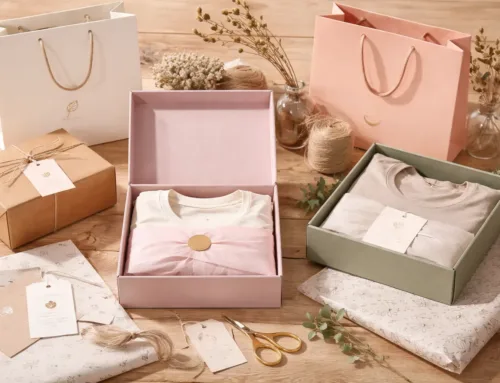
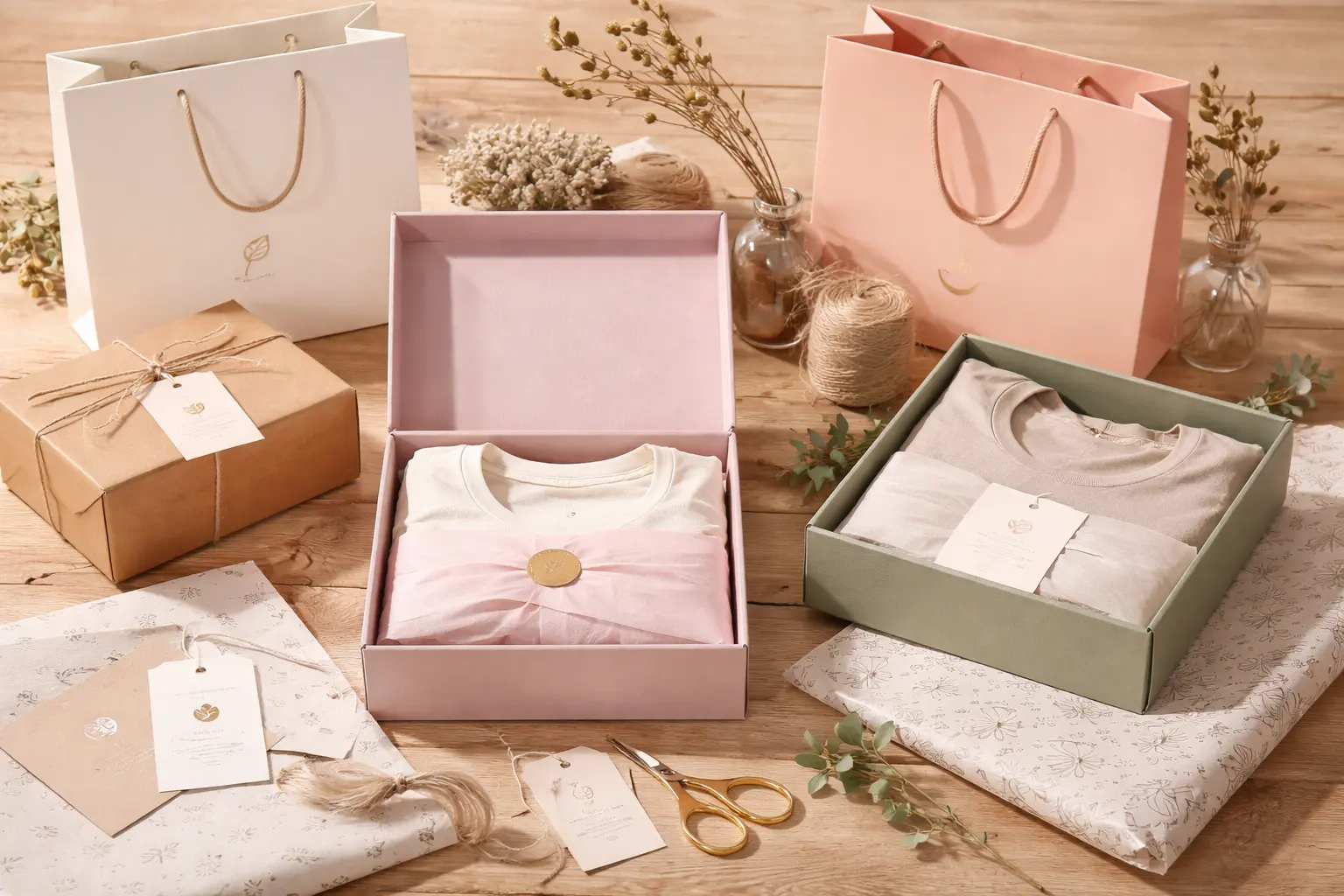
Proper Folding, Wrapping, and Presentation
This is where apparel fulfillment diverges most from standard warehouse operations:
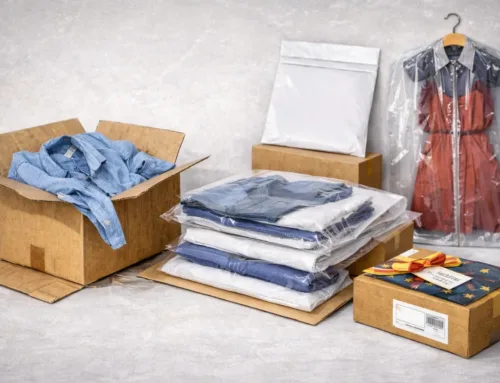
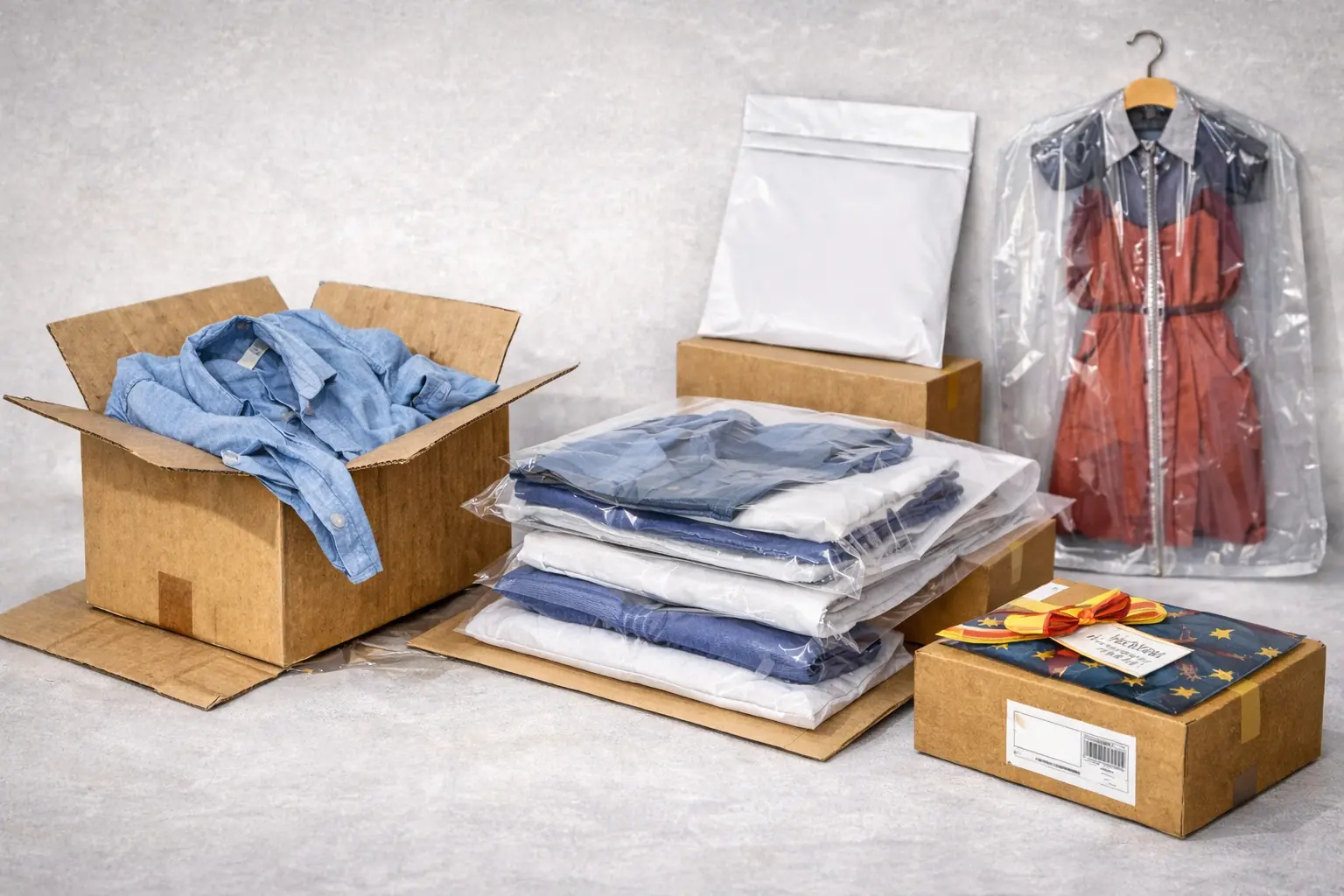
- Garments are folded according to brand-specific instructions (not just shoved into a bag)
- Tissue paper wrapping is executed consistently across every order
- Custom branded packaging elements—stickers, inserts, hang tags—are assembled per your specifications
- Quality inspection happens before sealing: correct item, correct size, no defects, proper presentation
An apparel-focused 3PL treats your packaging as a brand experience, not just a shipping requirement.
Multi-Channel Order Management
Most clothing brands sell across multiple channels—their own website, Amazon, TikTok Shop, wholesale accounts. A fulfillment partner integrates with your ecommerce platforms and routes orders from all channels into a single fulfillment workflow:
- Shopify, WooCommerce, BigCommerce orders sync automatically
- Marketplace orders (Amazon, Walmart) flow through the same system
- Wholesale and B2B orders are picked and packed to retailer specifications
- Inventory updates in real time across all channels to prevent overselling
Returns Processing
A complete apparel fulfillment partner doesn’t just ship outbound—they handle the reverse flow too:
- Returned garments are received and inspected
- Resellable items are refolded, repackaged, and returned to inventory
- Damaged or defective items are quarantined and reported
- Refunds or exchanges are triggered according to your policies
- Return reasons are tracked and reported to help you identify product issues
How to Choose the Right 3PL for Your Clothing Brand
The wrong fulfillment partner can be worse than doing it yourself. Here’s how to evaluate candidates.
Ask These Questions
About apparel experience:
- How many clothing brands do you currently fulfill for?
- Can I see photos or videos of your packing process for apparel?
- What garment types have you handled (streetwear, luxury, activewear, swimwear)?
About capabilities:
- Do you support custom branded packaging including tissue wrapping, inserts, and garment bags?
- What’s your order accuracy rate? How do you measure it?
- What ecommerce platforms do you integrate with?
- Can you handle same-day shipping for orders placed by cutoff?
About costs:
- What’s your pricing structure? (Per-pick, per-order, storage fees, receiving fees)
- Are there minimum order requirements or monthly minimums?
- What’s included versus what incurs extra charges?
- How do packaging material costs work—do I supply them or do you source them?
About location:
- Where are your fulfillment centers located?
- What percentage of the US population can you reach in two-day ground shipping?
- Do you offer East Coast fulfillment as well for bi-coastal coverage?
Red Flags to Watch For
- No apparel-specific experience: If they’ve never handled clothing before, you’re their experiment.
- Can’t show you sample packs: A reputable partner should be able to demonstrate their packaging quality.
- Long-term contracts required: Most quality 3PLs offer month-to-month terms because their retention is built on performance, not contracts.
- No technology integration: Manual order processing means errors and delays.
- Vague pricing: If they can’t give you a clear cost breakdown before you sign, expect surprises.
Start with a Trial
The best way to evaluate a 3PL is to test them with real orders:
- Send a limited batch of inventory (50-100 units of your best sellers)
- Run actual customer orders through their system for 30 days
- Order test packages shipped to yourself to evaluate packaging quality
- Monitor accuracy, speed, and communication throughout
- Gather customer feedback during the trial period
If the trial goes well, scale the relationship. If it doesn’t, you’ve learned what matters to you without committing your entire operation.
The Transition: What to Expect
Moving from self-fulfillment to a 3PL isn’t instant. A typical onboarding takes two to four weeks and follows this general process.
Week 1-2: Setup and Integration
- Sign agreement and establish your account
- Connect your ecommerce platforms and sales channels
- Document your packaging requirements (folding standards, insert sequence, branded materials)
- Ship your custom packaging materials to the warehouse
- Create Standard Operating Procedures for your specific brand requirements
Week 2-3: Inventory Transfer
- Ship your inventory to the 3PL’s warehouse
- The warehouse team receives, counts, and logs all items
- SKU mapping ensures inventory matches your system
- Storage locations are assigned for efficient picking
Week 3-4: Testing and Go-Live
- Run test orders through the system
- Verify packaging quality meets your standards
- Confirm shipping label accuracy and carrier selection
- Gradually shift live orders from self-fulfillment to the 3PL
- Monitor first 50-100 real orders closely before fully transitioning
Post-Launch: Optimization
The first 60-90 days are about fine-tuning:
- Adjust packaging instructions based on real-world results
- Optimize box sizes and material usage
- Review shipping carrier performance and costs
- Analyze inventory velocity and storage efficiency
- Establish regular communication cadence with your account manager
Frequently Asked Questions
How much does a 3PL cost for a clothing brand?
Most apparel 3PLs charge a combination of storage fees ($15-$40 per pallet per month), pick and pack fees ($2.50-$5.00 per order plus $0.50-$1.00 per additional item), and receiving fees ($25-$50 per hour or per-unit rates). Shipping costs are passed through at the 3PL’s discounted rates. Total per-order costs typically range from $5-$12 including shipping, depending on package size and destination.
Will I lose control over my brand experience if I outsource?
No—if you choose the right partner. A 3PL experienced in apparel packaging executes your packaging design exactly as specified. You define the folding method, tissue wrapping, insert sequence, and branded materials. The 3PL replicates it consistently across every order. Most brands report that packaging consistency actually improves after outsourcing because the process is standardized.
What order volume do I need to use a 3PL?
There’s no universal minimum. Some 3PLs serve brands shipping as few as 50 orders per month, while others focus on higher-volume clients. That said, most clothing brands find 3PL partnerships cost-effective at 100+ orders per month when accounting for time savings, shipping discounts, and reduced error rates. For small businesses, the key calculation is the value of your time versus the cost of outsourcing.
How long does it take to switch to a 3PL?
Plan for two to four weeks from signing to fully live. The timeline depends on the complexity of your product catalog, number of sales channels, custom packaging requirements, and the volume of inventory being transferred. Some brands run a hybrid model during transition—fulfilling some orders in-house while ramping up with the 3PL.
What happens if the 3PL makes a mistake on an order?
Reputable 3PLs take responsibility for fulfillment errors—typically covering the cost of re-shipping and replacement. Ask about their error resolution policy before signing. The best partners maintain accuracy rates above 99.5%, meaning errors are rare. When they do happen, the resolution process should be fast and transparent.
Conclusion
Outsourcing apparel fulfillment isn’t about giving up control—it’s about gaining capacity. The brands that scale successfully recognize when fulfillment expertise, infrastructure, and consistency matter more than doing everything under one roof.
If you’re spending your best hours packing boxes instead of building your brand, if order accuracy is slipping, or if peak seasons leave you scrambling, those are signals—not growing pains you push through indefinitely.
The right apparel fulfillment partner handles the product fulfillment complexity so you can focus on what got you into fashion in the first place: creating products your customers love.