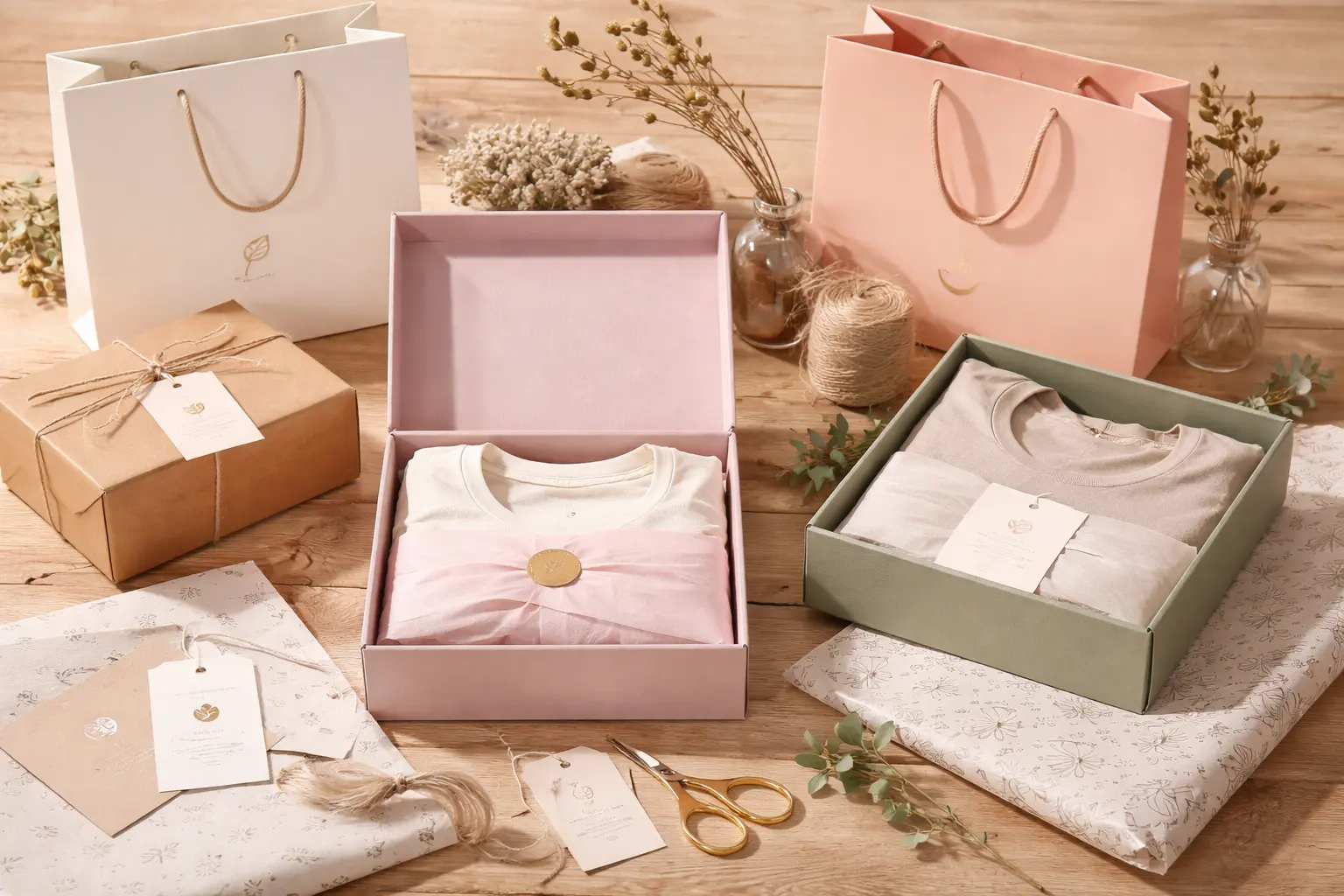
Your product might be exceptional, but if it arrives in a plain poly bag with a generic packing slip, the customer’s first physical impression of your brand falls flat. Custom packaging for clothing brands isn’t a luxury anymore—it’s a revenue driver that influences repeat purchases, social sharing, and how customers perceive your price point.
In a market where DTC apparel brands compete for attention across every channel, the unboxing moment is one of the few touchpoints you fully control. This guide covers everything clothing brands need to know about building branded packaging that strengthens customer loyalty without wrecking your margins.
Why Custom Packaging Matters for Apparel Brands
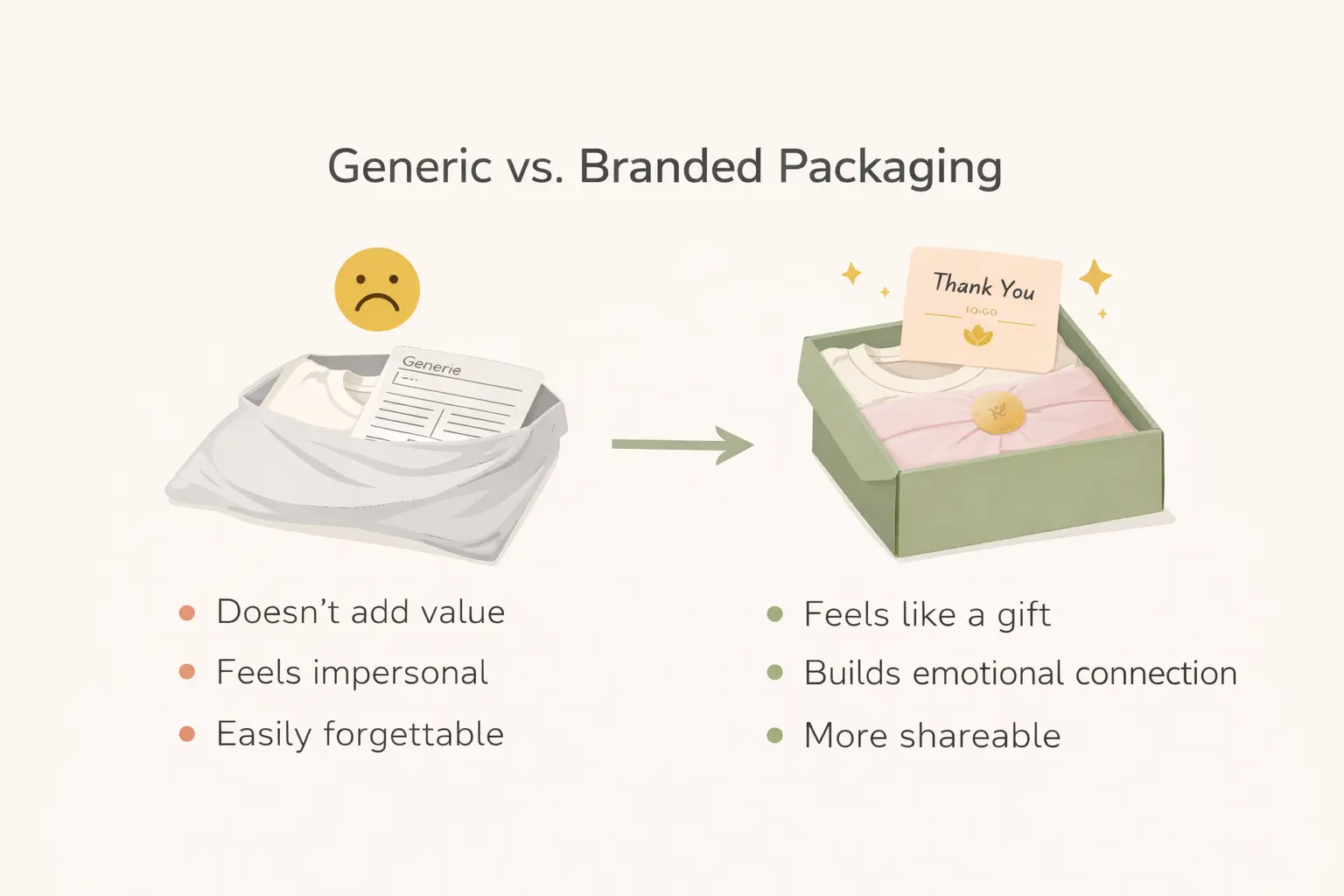
Generic packaging tells your customer one thing: you didn’t think about them after they clicked “buy.” Branded packaging tells a different story—it says you care about the details, and that same care went into the garment itself.
The numbers back this up:
- 40% of online shoppers say branded packaging makes them more likely to recommend a brand to others
- Unboxing videos remain one of the highest-performing organic content categories on social media, generating millions of views across TikTok and YouTube
- Brands that invest in custom packaging report 25-30% higher repeat purchase rates compared to those using standard shipping materials
For apparel specifically, packaging carries extra weight. Clothing is personal. It’s worn on the body. When a customer opens a beautifully wrapped garment with tissue paper, a handwritten-style thank-you card, and branded details throughout, the perceived value of that $45 t-shirt or $120 dress rises significantly.
Core Elements of Branded Apparel Packaging
Building a custom packaging system doesn’t mean overhauling everything at once. Start with the elements that create the most impact per dollar spent.
Custom Boxes and Mailers
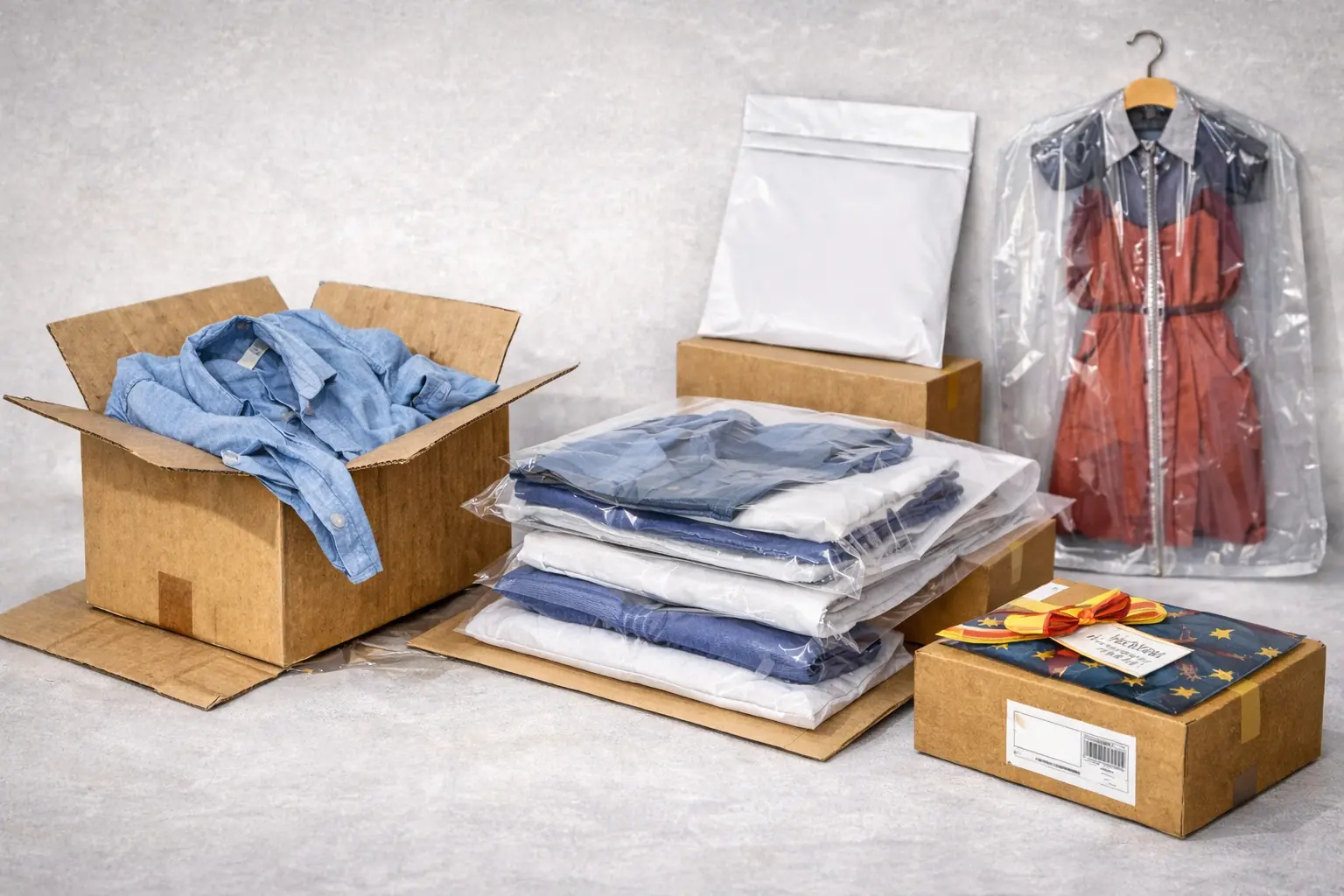
Your outer packaging is the first thing a customer sees. Options range from budget-friendly to premium:
- Branded poly mailers: Custom-printed in your brand colors with your logo. The most cost-effective entry point—typically $0.15-$0.50 per unit at volume. Works well for casual and activewear brands.
- Custom mailer boxes: Printed corrugated boxes that open to reveal your brand. More premium, typically $1.50-$4.00 per unit. Ideal for mid-range and luxury positioning.
- Rigid gift boxes: High-end presentation boxes with magnetic closures or lift-off lids. $5.00-$15.00+ per unit. Reserved for luxury fashion and special collections.
The right choice depends on your price point and brand positioning. A streetwear brand selling $30 tees doesn’t need rigid boxes—but a custom poly mailer with bold graphics can feel just as intentional.
Tissue Paper and Wrapping
Tissue paper is the highest-impact, lowest-cost branded element you can add. Custom tissue printed with your logo or pattern costs as little as $0.05-$0.15 per sheet, yet it transforms the entire unboxing experience.
How to use tissue effectively:
- Wrap each garment individually for a “gift” feeling
- Use tissue in your brand colors even if you skip custom printing
- Layer two sheets—one colored, one white—for a premium reveal
- Secure with a branded sticker or seal
Tissue also serves a practical purpose: it reduces friction between garments in multi-item orders, helping clothes arrive wrinkle-free. This is why proper clothing packaging technique pairs tissue with correct folding methods.
Hang Tags and Care Labels
For brands shipping garments directly to consumers, hang tags do marketing work that product pages can’t:
- Brand storytelling: Share your mission, origin story, or craftsmanship details
- Care instructions: Help customers maintain the garment and reduce returns
- Authenticity markers: Reinforce that the customer bought the real thing
- QR codes: Link to styling guides, care videos, or loyalty programs
Custom hang tags cost $0.03-$0.20 per piece depending on material and finishing. They’re one of the few packaging elements customers keep and reference after the box is recycled.
Printed Inserts and Cards
What you put inside the box alongside the garment matters:
- Thank-you cards: A simple message that makes the transaction feel personal
- Discount codes: Drive repeat purchases with a next-order incentive
- Lookbook cards: Show the customer how to style their purchase with other pieces
- Care guides: Reduce returns by helping customers maintain their garments
- Referral cards: Turn satisfied customers into brand ambassadors
The best inserts feel like a gift, not an advertisement. One well-designed card with a genuine message outperforms three promotional flyers every time.
Branded Tape and Stickers
Small details that signal intentionality:
- Custom packing tape with your logo turns a plain box into a branded moment before the customer even opens it
- Branded stickers sealing tissue paper or closing poly bags add polish at $0.02-$0.10 per unit
- Seal stickers on the outside of mailers create anticipation
These are low-cost additions that compound in their effect. Individually, each one is minor. Together, they create a cohesive brand experience from the outside of the package to the garment itself.
How to Design Your Packaging System
Building a branded packaging system requires balancing aesthetics, functionality, and budget. Here’s a structured approach.
Step 1: Define Your Brand Positioning
Your packaging should match your price point and customer expectations:
| Brand Tier | Customer Expectation | Packaging Approach |
| Budget / Value | Clean, functional, no waste | Branded poly mailer + branded sticker |
| Mid-Range | Thoughtful, cohesive branding | Custom mailer box + tissue + thank-you card |
| Premium / Luxury | Exceptional, gift-like experience | Rigid box + tissue + ribbon + multiple inserts |
Don’t over-package a $25 product or under-package a $200 one. Mismatched packaging creates cognitive dissonance—customers feel something is “off” even if they can’t articulate why.
Step 2: Choose Your Materials
Material choices communicate brand values:
- Kraft / brown materials: Signal eco-consciousness, authenticity, earthiness
- White / clean materials: Communicate minimalism, modernity, premium quality
- Black materials: Convey luxury, exclusivity, edge
- Colored materials: Express personality, playfulness, brand identity
Sustainable materials are increasingly important. Recycled cardboard, soy-based inks, biodegradable poly mailers, and compostable tissue paper let you build a premium experience while aligning with consumer values around environmental responsibility.
Step 3: Map the Unboxing Sequence
Think about what the customer experiences in order:
- Exterior: Branded box or mailer arrives—first impression
- Opening: Custom tape or seal creates anticipation
- First reveal: Tissue paper, packing material, overall visual impact
- Discovery: Thank-you card, inserts, promotional materials
- The garment: Individually wrapped, perfectly folded, ready to wear
- After: Reusable packaging, return materials, lasting impression
Each stage is an opportunity to reinforce your brand. Map it out, photograph mock-ups, and test the experience yourself before committing to production.
Step 4: Source and Test
Sourcing options:
- Direct from manufacturers: Lowest per-unit cost at high volumes (1,000+ units minimum)
- Packaging suppliers: Companies like noissue, Packlane, or Arka offer lower minimums with customization
- Through your 3PL: Many fulfillment providers source and store custom packaging on your behalf, simplifying logistics
Testing protocol:
- Order samples before committing to full runs
- Pack and ship test orders to yourself and team members
- Photograph the unboxing from the customer’s perspective
- Check that garments arrive wrinkle-free and well-presented
- Verify packaging survives shipping without damage
Packaging Costs: What to Budget
One of the biggest concerns clothing brands have about custom packaging is cost. Here’s a realistic breakdown.
Per-Order Cost Ranges
| Packaging Level | Materials Cost per Order | Best For |
| Basic branded | $0.50 – $1.50 | Startups, high-volume basics |
| Mid-tier branded | $1.50 – $4.00 | Growing DTC brands |
| Premium branded | $4.00 – $10.00+ | Luxury and premium fashion |
How to Keep Costs Under Control
- Order in bulk: Unit costs drop 30-50% when you scale from 500 to 5,000+ units
- Standardize sizes: Limit yourself to two or three package sizes to increase volume per SKU
- Prioritize impact: Spend on the two or three elements that create the most impression—you don’t need every option
- Right-size your boxes: Oversized packaging wastes material and increases dimensional weight shipping charges
- Work with your fulfillment partner: A 3PL experienced in apparel packaging can advise on which materials deliver the best ROI and may have wholesale pricing relationships you can leverage
The ROI Calculation
Custom packaging pays for itself when you factor in:
- Reduced return rates from better garment presentation
- Higher repeat purchase rates from positive unboxing experiences
- Free marketing from customer-generated unboxing content on social media
- Increased perceived value supporting premium pricing
- Lower customer acquisition costs through word-of-mouth referrals
A $2.00 per-order investment in branded packaging that lifts your repeat purchase rate by even 10% can generate thousands in additional revenue monthly.
Custom Packaging and Your Fulfillment Workflow
Beautiful packaging means nothing if it can’t be executed consistently at scale. This is where the operational side matters.
The DIY Challenge
When you pack orders yourself, maintaining packaging quality is manageable at low volume. But as orders grow:
- Folding consistency varies depending on who’s packing
- Tissue wrapping gets skipped during rush periods
- Insert cards run out and aren’t reordered in time
- Custom materials take up storage space you need for inventory
- Training new help on your packaging standards takes time
How 3PLs Execute Branded Packaging
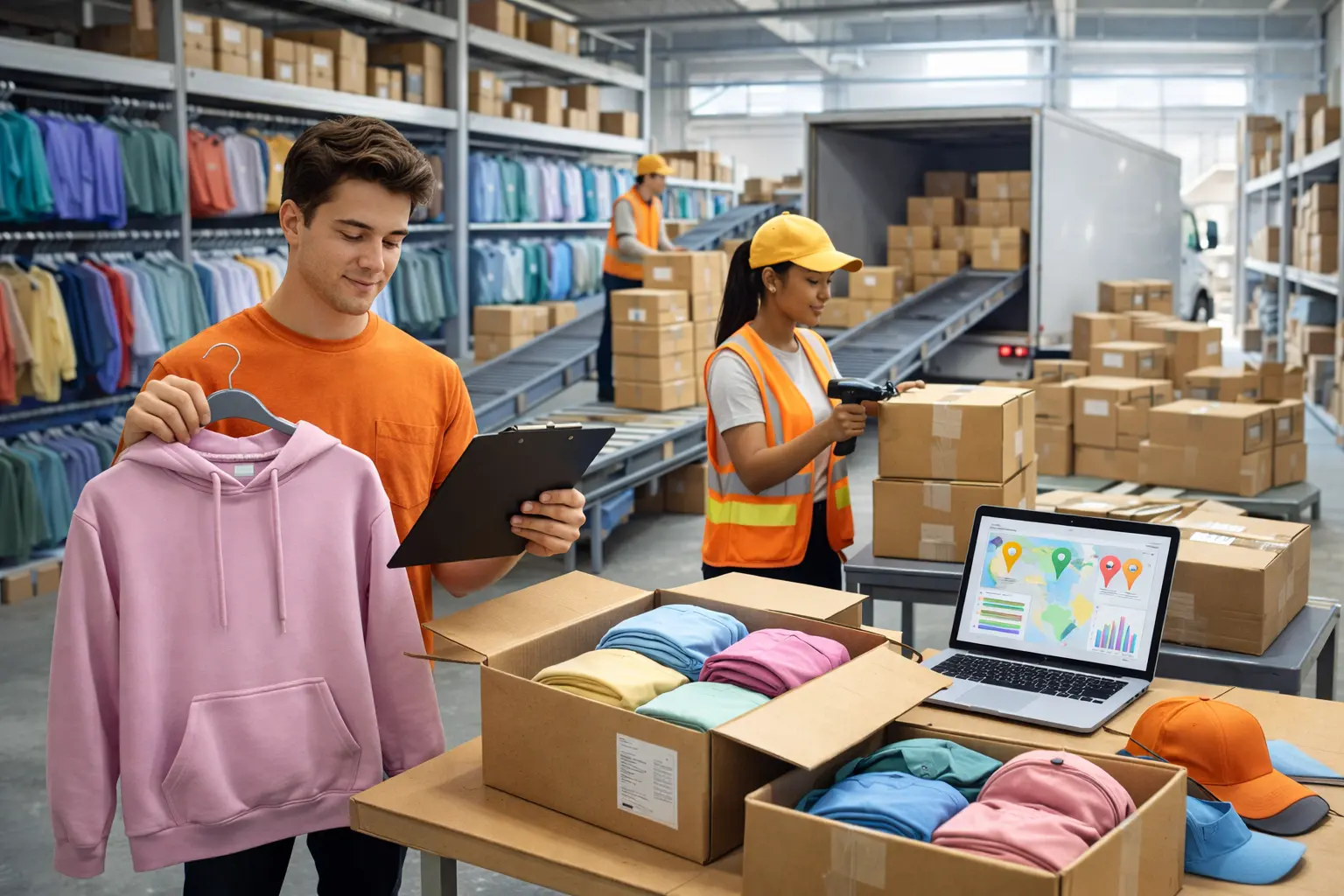
Professional ecommerce fulfillment providers build your custom packaging into their standard workflow:
- Kitting: Your custom materials (tissue, stickers, inserts, garment bags) are stored alongside inventory and assembled per your specifications
- Standard Operating Procedures: Written packaging guidelines ensure every order looks identical regardless of which team member packs it
- Quality checks: Trained staff inspect each garment and verify the packaging meets brand standards before sealing
- Material management: The 3PL monitors packaging material inventory and alerts you before supplies run low
- Scalability: Whether it’s Tuesday’s 50 orders or Black Friday’s 2,000, the process and quality stay the same
This consistency is especially critical for direct-to-consumer brands where the package is the only physical brand interaction a customer has. One sloppy package out of 100 can be the one that gets posted on social media.
What to Look for in a Fulfillment Partner
Not every 3PL handles custom apparel packaging well. When evaluating partners, ask:
- Do you have experience with clothing and fashion brands?
- Can you handle garment-specific tasks like tissue wrapping, hang tag attachment, and proper folding?
- Will you store my custom packaging materials at no extra charge?
- Can I see photos of actual orders you’ve packed for other apparel clients?
- What’s your process for maintaining consistency across team members?
- How do you handle returns and repackaging?
A fulfillment partner that specializes in apparel understands that pick and pack for clothing is fundamentally different from picking and packing electronics or supplements. The handling, the care, the presentation standards are all higher.
Real-World Packaging Strategies by Brand Stage
Startup Stage (0-50 Orders/Day)
Focus: Get the basics right without overinvesting.
- Branded poly mailers or plain kraft mailers with a branded sticker
- One color of tissue paper
- A simple thank-you card (can be printed in-house)
- Total cost per order: $0.50-$1.00
Growth Stage (50-300 Orders/Day)
Focus: Build a cohesive system that scales.
- Custom printed mailer boxes or poly mailers
- Branded tissue paper
- Professional insert cards (discount code + care instructions)
- Branded stickers or tape
- Partner with a fulfillment center to maintain consistency
- Total cost per order: $1.50-$3.50
Established Stage (300+ Orders/Day)
Focus: Optimize, differentiate, and delight.
- Premium custom boxes with interior printing
- Multi-element unboxing sequence (tissue, ribbon, card, garment bag)
- Seasonal packaging variations
- Sustainable materials throughout
- VIP packaging tiers for high-value customers
- Full 3PL integration with warehousing and distribution
- Total cost per order: $3.00-$8.00+
Frequently Asked Questions
How much does custom packaging cost for a small clothing brand?
Entry-level custom packaging starts at $0.50-$1.50 per order. A branded poly mailer ($0.20-$0.50), tissue paper ($0.05-$0.15), and a sticker ($0.03-$0.10) create a solid branded experience at minimal cost. As you grow, you can add elements incrementally without redesigning your entire system.
Does custom packaging actually increase sales?
Yes. Studies consistently show that branded packaging increases repeat purchase rates by 25-30% and drives organic social media exposure through customer-generated unboxing content. The ROI is strongest for DTC brands where the package is the only physical brand interaction.
What’s the minimum order quantity for custom packaging?
It varies by supplier and material. Custom stickers can start at quantities as low as 100. Custom poly mailers typically start at 500-1,000 units. Custom boxes usually require 250-500 minimum. Working through a 3PL partner that has existing supplier relationships can sometimes lower minimums.
Can a 3PL handle my custom branded packaging?
Yes—but not all 3PLs are equal here. Generic fulfillment warehouses may struggle with garment-specific tasks like tissue wrapping and proper folding. Look for a provider with documented experience in apparel packaging and ask to see sample packs before committing.
How do I make my packaging more sustainable?
Start with recyclable corrugated boxes and eliminate plastic where possible. Switch to biodegradable poly mailers, soy-based inks, recycled tissue paper, and paper-based tape. Communicate your sustainability choices on packaging or inserts—customers appreciate transparency about your materials.
Conclusion
Custom packaging for clothing brands is one of the highest-ROI investments you can make in customer experience. It turns a transactional delivery into a brand moment, drives repeat purchases, generates free social media exposure, and reinforces the quality and care behind your garments.
Start where you are—even a branded sticker and tissue paper elevate the experience. As your brand grows, build a system that scales with you, whether you’re packing orders yourself or working with a fulfillment partner experienced in apparel packaging.
The brands that customers remember are the ones that got the details right. Your packaging is one of those details.