Today’s ecommerce customers don’t shop through a single channel. They discover products on Instagram, compare prices on Amazon, buy through your Shopify store, and expect the same fast, reliable experience no matter where they click “add to cart.” In fact, omnichannel approaches now account for over 40% of all ecommerce sales, and brands using multi-channel campaigns see up to a 287% higher purchase rate compared to single-channel strategies.
The challenge isn’t selling across multiple channels. It’s fulfilling orders across all of them without inventory conflicts, shipping delays, or inconsistent customer experiences. That’s where omnichannel ecommerce fulfillment comes in.
In this guide, we’ll break down what omnichannel fulfillment actually means, why it matters for growing brands, what to look for in an omni channel fulfillment provider, and how the right omnichannel 3PL services partner can turn multi-channel complexity into a competitive advantage.
What Is Omnichannel Ecommerce Fulfillment?
Omnichannel ecommerce fulfillment is an order management and logistics strategy that unifies inventory, order processing, and shipping across every sales channel into a single, integrated operation. Instead of treating your Shopify store, Amazon listings, Walmart marketplace, retail wholesale accounts, and social commerce channels as separate fulfillment silos, an omnichannel approach manages them all from one centralized system.
Multichannel vs. Omnichannel: What’s the Difference?
The terms are often used interchangeably, but they’re not the same.
Multichannel fulfillment means you sell on multiple platforms, but each channel may have its own inventory pool, shipping process, and tracking system. This creates blind spots, overselling, and operational inefficiency.
Omnichannel fulfillment connects every channel to a single source of truth for inventory. Orders flow into one system regardless of origin, stock updates in real time across all platforms, and the customer receives a consistent experience whether they bought from your website, a marketplace, or a retail partner.
For brands selling across three or more channels, the difference between multichannel and omnichannel fulfillment is the difference between managing chaos and operating a scalable business.
Why Omnichannel Fulfillment Matters More Than Ever
The shift toward omnichannel isn’t a trend. It’s a structural change in how consumers buy. Here’s what the data says:
- The omnichannel market is projected to reach $25.35 billion by 2032, growing at a 14% CAGR from its current $10.13 billion valuation.
- 73% of shoppers prefer to buy through multiple channels, expecting seamless experiences across all of them.
- 84% of brands now use a third-party fulfillment companyfor at least some of their orders, up significantly from pre-pandemic levels.
- 59% of brands operate more than one fulfillment center, and nearly 44% plan to add locations this year to improve coverage.
- 69% of brands target 2 to 3 day delivery as their standard domestic shipping window.
For ecommerce brands, the message is clear: customers are already shopping across channels. Your fulfillment operation needs to keep up, or you’ll lose sales to competitors who can deliver faster and more reliably across every touchpoint.
Key Components of an Omnichannel Fulfillment Strategy
Building a successful omnichannel ecommerce fulfillmentoperation requires several interconnected systems working together. Here are the components that matter most.
Centralized Inventory Management
A unified inventory system is the foundation of omnichannel fulfillment. Your warehousing and inventory management platform must track stock levels across every channel in real time, automatically adjusting available quantities as orders come in and returns are processed. Without this, overselling and stockouts become inevitable.
Unified Order Management
Every order, whether it originates from Shopify, Amazon, Walmart, eBay, TikTok Shop, or a B2B wholesale portal, should flow into a single order management system. This enables consistent processing, accurate prioritization, and reliable same-day fulfillment regardless of where the customer placed their order.
Multi-Channel Platform Integrations
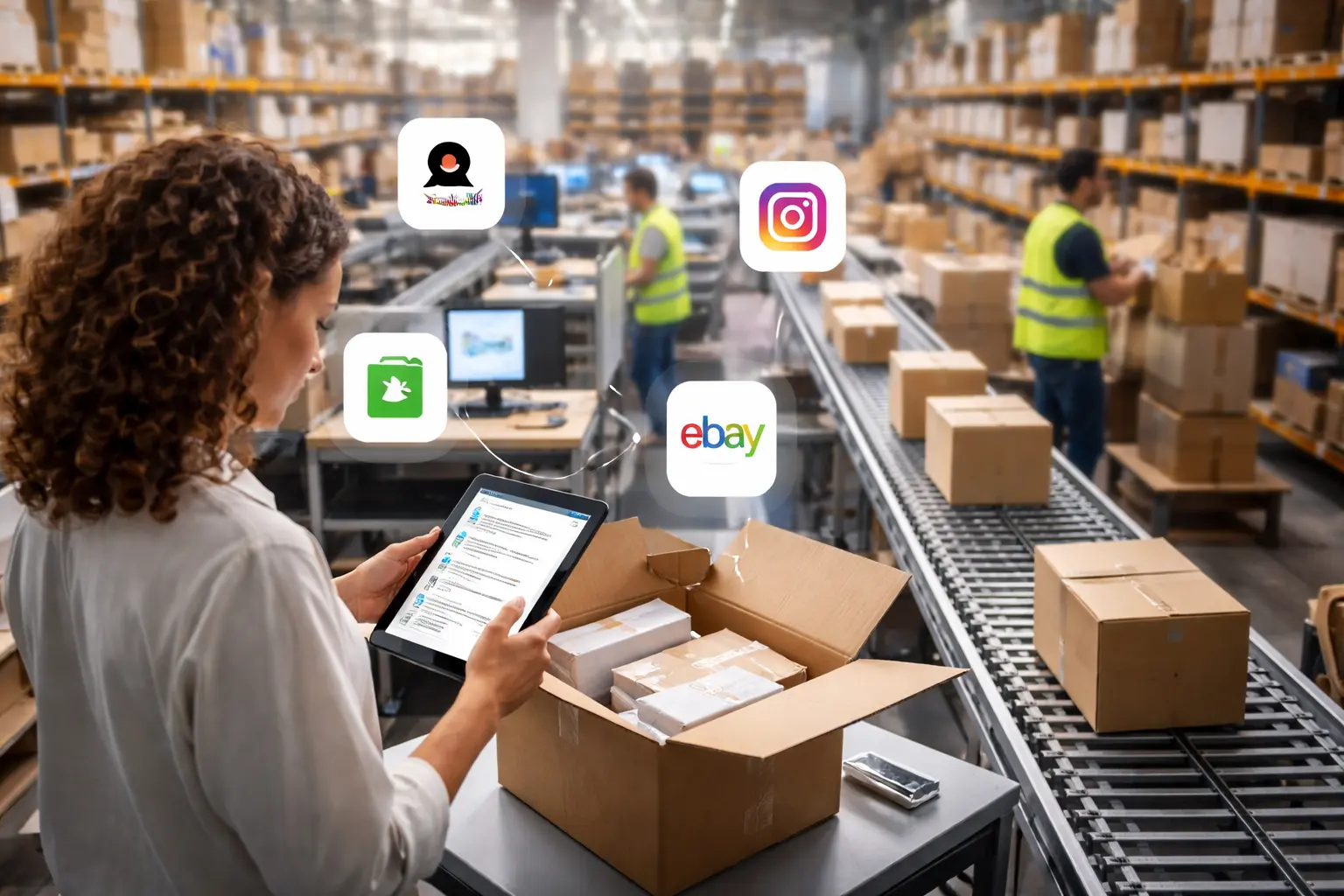
Your fulfillment partner needs native integrations with the platforms you sell on. The best omnichannel 3PL services providers offer 50+ platform integrations including Shopify, WooCommerce, BigCommerce, Amazon (FBA and FBM), Walmart, eBay, and social commerce channels, all syncing automatically without manual data entry.
Intelligent Order Routing
When you operate multiple warehouse locations, intelligent order routing automatically directs each order to the fulfillment center closest to the customer. This reduces transit times, lowers shipping costs, and ensures the fastest possible delivery across all channels.
Returns and Reverse Logistics
Omnichannel selling means omnichannel returns. Customers expect to return products easily, regardless of which channel they purchased from. A strong returns and exchanges process that handles inspection, restocking, and disposition quickly is essential for protecting both margins and customer relationships.
Real-Time Visibility and Reporting
You can’t optimize what you can’t measure. Real-time dashboards showing inventory levels, order status, shipping performance, and channel-level analytics give you the data to make smarter decisions about stock allocation, channel investment, and fulfillment strategy.
Benefits of Partnering with an Omnichannel 3PL
Most ecommerce brands don’t have the infrastructure to build omnichannel fulfillment in-house. That’s why partnering with the right omni channel fulfillment provider is one of the highest-leverage decisions a growing brand can make.
Unified Inventory Eliminates Overselling
When all your channels draw from one inventory pool managed by your 3PL, you eliminate the risk of selling products you don’t have. Real-time syncing means your Amazon listing updates the moment a Shopify order ships, and vice versa.
Faster Fulfillment Across Every Channel
A capable omnichannel 3PL processes all orders through the same optimized workflow. Whether it’s a single DTC order from your website or a palletized B2B shipment to a retailer, pick and pack fulfillment happens with the same accuracy and speed.
Lower Operational Costs
Consolidating fulfillment with a single 3PL partner eliminates the overhead of managing separate warehouse operations, shipping accounts, and technology stacks for each channel. You benefit from the 3PL’s carrier volume discounts, established warehouse infrastructure, and existing technology integrations.
Consistent Customer Experience
Your brand promise shouldn’t change based on where a customer places their order. With omnichannel fulfillment, every package ships with the same branded packaging, same accuracy standards, and same delivery speed, whether the order came from your DTC store or a marketplace.
Scalability Without Complexity
Adding a new sales channel shouldn’t mean hiring a new fulfillment team. The right omnichannel 3PL services partner absorbs the operational complexity of new channels, letting you expand to Walmart, TikTok Shop, or wholesale without rebuilding your logistics from scratch.
Data-Driven Decision Making
With all your fulfillment data flowing through one system, you get a clear picture of which channels perform best, which products move fastest, and where shipping costs are highest. This data drives smarter inventory allocation and channel strategy.
Common Challenges of Omnichannel Fulfillment (and How to Solve Them)
Omnichannel fulfillment is powerful, but it comes with challenges that the wrong partner will struggle to manage. Here’s what to watch for.
Inventory Synchronization Across Channels
The challenge: When inventory doesn’t update in real time, you risk overselling on one channel while sitting on dead stock in another.
The solution: Partner with a 3PL that uses a WMS with real-time API connections to all your sales channels, not batch syncing that updates every few hours.
Channel-Specific Compliance Requirements
The challenge: Amazon, Walmart, Target, and other retail partners each have unique packaging, labeling, and routing guide requirements. Non-compliance means chargebacks and lost accounts.
The solution: Work with an omni channel fulfillment providerexperienced in both DTC and B2B retail compliance, with the ability to handle product-specific fulfillment requirements for each channel.
Returns Complexity
The challenge: Customers buying across multiple channels expect to return products seamlessly. Managing returns from DTC, marketplace, and retail channels requires different processes for each.
The solution: Choose a 3PL with unified returns processing that handles inspection, grading, and restocking regardless of which channel the original sale came through.
Technology Integration Gaps
The challenge: Your ecommerce stack includes platforms, ERPs, marketing tools, and analytics. If your 3PL can’t integrate with all of them, you’re stuck with manual workarounds and data silos.
The solution: Evaluate integration capabilities before signing. The best omnichannel 3PLs maintain pre-built connectors for major platforms and offer API access for custom integrations.
What to Look for in an Omnichannel 3PL Services Provider
Not every 3PL is equipped for true omnichannel fulfillment. Here’s how to separate providers who can deliver from those who just use the buzzword.
Broad Platform Integration
Your 3PL should integrate natively with your ecommerce platform, marketplaces, and retail channels out of the box. Ask specifically about Shopify, Amazon (both FBA prep and FBM), WooCommerce, Walmart, eBay, BigCommerce, and any emerging channels like TikTok Shop. If they can’t connect to where you sell, they can’t fulfill omnichannel.
Both DTC and B2B Capability
Many 3PLs specialize in either direct-to-consumer fulfillment or B2B distribution, but not both. True omnichannel 3PL services require the ability to pick and pack individual consumer orders one minute and build palletized, routing-guide-compliant retail shipments the next.
Strategic Warehouse Network
A single warehouse limits your delivery speed and increases shipping costs. Look for a fulfillment partner with strategically located warehouses that cover both coasts, enabling 2-day ground shipping to the majority of U.S. consumers.
Accuracy and Processing Speed
Omnichannel amplifies the impact of errors. A wrong item shipped from your Amazon FBM channel hurts your seller metrics. A mislabeled retail shipment triggers chargebacks. Demand accuracy rates of 99.5% or higher and same-day processing commitments.
Transparent Pricing
Omnichannel fulfillment involves complex billing across storage, picking, packing, shipping, and special services. Your 3PL should offer clear, predictable pricing without hidden fees for integrations, channel setups, or platform connections.
Dedicated Account Management
When you’re fulfilling across five or more channels, problems will arise. You need a partner with dedicated support that knows your brand, understands your channel-specific requirements, and can resolve issues before they impact your customers.
How Ship Core Fulfillment Delivers Omnichannel Ecommerce Fulfillment
At Ship Core Fulfillment, we built our operation from the ground up to handle the complexity of omnichannel ecommerce fulfillment, so you don’t have to.
As a family-owned 3PL with over 10 years of experience, we combine the hands-on attention of a boutique fulfillment partner with the technology and infrastructure to compete with the largest providers in the industry.
Here’s what makes our omnichannel 3PL services different:
- 50+ Platform Integrations: Shopify, Amazon FBM, WooCommerce, Walmart, BigCommerce, eBay, and more. Your channels connect to our ecommerce fulfillment platform automatically with real-time inventory syncing.
- DTC + B2B Under One Roof: We fulfill individual consumer orders and palletized retail shipments from the same warehouse, with channel-specific packaging and compliance handling for each.
- Dual-Coast Warehouse Network: With fulfillment centers in California and New Jersey, we provide 2-day ground shipping to over 95% of the U.S. population.
- 99.8% Order Accuracy: Every order goes through WMS-driven quality control, ensuring the right product reaches the right customer every time, across every channel.
- Same-Day Processing: Orders placed before our cutoff are picked, packed, and shipped the same day, regardless of which channel they originate from.
- Branded Packaging: Your custom unboxing experience stays consistent whether a customer orders from your website, Amazon, or any other channel.
- Zero-Risk Transfer: We cover your transfer fees and offer 30 days of free storage when you switch to Ship Core, making the transition to omnichannel fulfillment painless.
Whether you’re a small business selling on two channels or an established brand managing five or more, we scale with your growth without adding operational complexity.
Frequently Asked Questions About Omnichannel Fulfillment
What is omnichannel ecommerce fulfillment?
Omnichannel ecommerce fulfillment is the process of managing orders and inventory across all your sales channels, including your DTC website, marketplaces like Amazon and Walmart, social commerce platforms, and B2B retail accounts, through a single, unified fulfillment system. Unlike multichannel fulfillment, which treats each channel independently, omnichannel fulfillment connects everything to one inventory pool and one operational workflow.
How is omnichannel fulfillment different from multichannel fulfillment?
Multichannel means selling on multiple platforms. Omnichannel means integrating those platforms into a single fulfillment operation. With multichannel, each channel may have separate inventory, shipping processes, and tracking. With omnichannel, every channel shares one real-time inventory system, one order management platform, and one consistent fulfillment process.
Why do I need an omnichannel 3PL instead of managing fulfillment in-house?
Managing omnichannel fulfillment in-house requires significant investment in warehouse space, WMS technology, multi-carrier shipping accounts, platform integrations, and trained labor. An omnichannel 3PL services provider like Ship Core Fulfillment already has this infrastructure in place, allowing you to focus on growing your brand while we handle the logistics across all your channels.
What platforms should an omnichannel fulfillment provider integrate with?
At minimum, your omni channel fulfillment provider should integrate with your primary ecommerce platform (Shopify, WooCommerce, or BigCommerce), major marketplaces (Amazon, Walmart, eBay), and any additional channels you sell through. Ship Core offers 50+ pre-built integrations that cover all major ecommerce and marketplace platforms.
How long does it take to set up omnichannel fulfillment with a 3PL?
Typical onboarding with an experienced omnichannel 3PL takes 2 to 4 weeks. This includes connecting your sales channels, transferring inventory, configuring channel-specific packaging and compliance requirements, and running test orders to ensure everything works correctly before going live.
Can small businesses benefit from omnichannel fulfillment?
Absolutely. Omnichannel fulfillment isn’t just for enterprise brands. Small and mid-size businesses that sell on even two or three channels benefit from unified inventory management, reduced overselling risk, and the ability to scale into new channels without adding warehouse complexity. Ship Core has no minimum order requirements, making omnichannel fulfillment accessible to businesses of all sizes.
![East Coast Order Fulfillment Provider: [Essential Guide]](https://shipcorefulfillment.com/wp-content/uploads/2026/02/east-coast-order-fulfillment-provider-500x383.webp)