Direct-to-consumer fulfillment has transformed from a niche strategy into the backbone of modern retail. By selling and shipping products straight to customers—without wholesalers, distributors, or retail middlemen—brands gain control over their margins, customer relationships, and brand experience.
In 2026, DTC is projected to contribute 25% to 50% of total retail sales, with global ecommerce reaching $9.4 trillion. Whether you’re launching a new brand or scaling an established business, understanding how direct-to-consumer fulfillment works is essential for competing in today’s market.
This guide breaks down the DTC fulfillment process, explores current trends shaping the industry, and helps you decide whether to handle fulfillment in-house or partner with a 3PL.
What Is Direct-to-Consumer Fulfillment?
Direct-to-consumer fulfillment is the process of storing, packing, and shipping products directly from a brand to individual customers. Unlike traditional retail models where products move through distributors and retailers before reaching consumers, DTC fulfillment creates a direct line between your warehouse and your customer’s doorstep.
This model encompasses everything that happens after a customer clicks “buy”:
- Receiving and storing inventory
- Processing incoming orders
- Picking products from warehouse shelves
- Packing items securely with branded materials
- Shipping via carriers to customer addresses
- Handling returns and exchanges
The DTC approach puts brands in complete control of the customer experience—from the moment an order is placed until the package arrives.
How Direct-to-Consumer Fulfillment Works: Step-by-Step
Understanding each stage of the fulfillment process helps identify optimization opportunities and potential bottlenecks.
Step 1: Inventory Receiving and Storage
Before you can ship anything, products must arrive at your fulfillment location and be properly stored.
Receiving Process: – Inbound shipments arrive from manufacturers or suppliers – Staff inspect items for damage or discrepancies – Products are counted and logged into the warehouse management system – Items receive SKU labels and location assignments – Inventory is placed in designated storage areas
Proper receiving prevents downstream problems. Miscounted inventory leads to overselling, while damaged goods shipped to customers result in returns and negative reviews.
Step 2: Order Processing
When a customer places an order on your website or marketplace, the fulfillment process begins.
Order Flow: 1. Customer completes checkout on your ecommerce platform 2. Order data transmits to your fulfillment system 3. System verifies inventory availability 4. Order enters the fulfillment queue 5. Picking instructions generate automatically
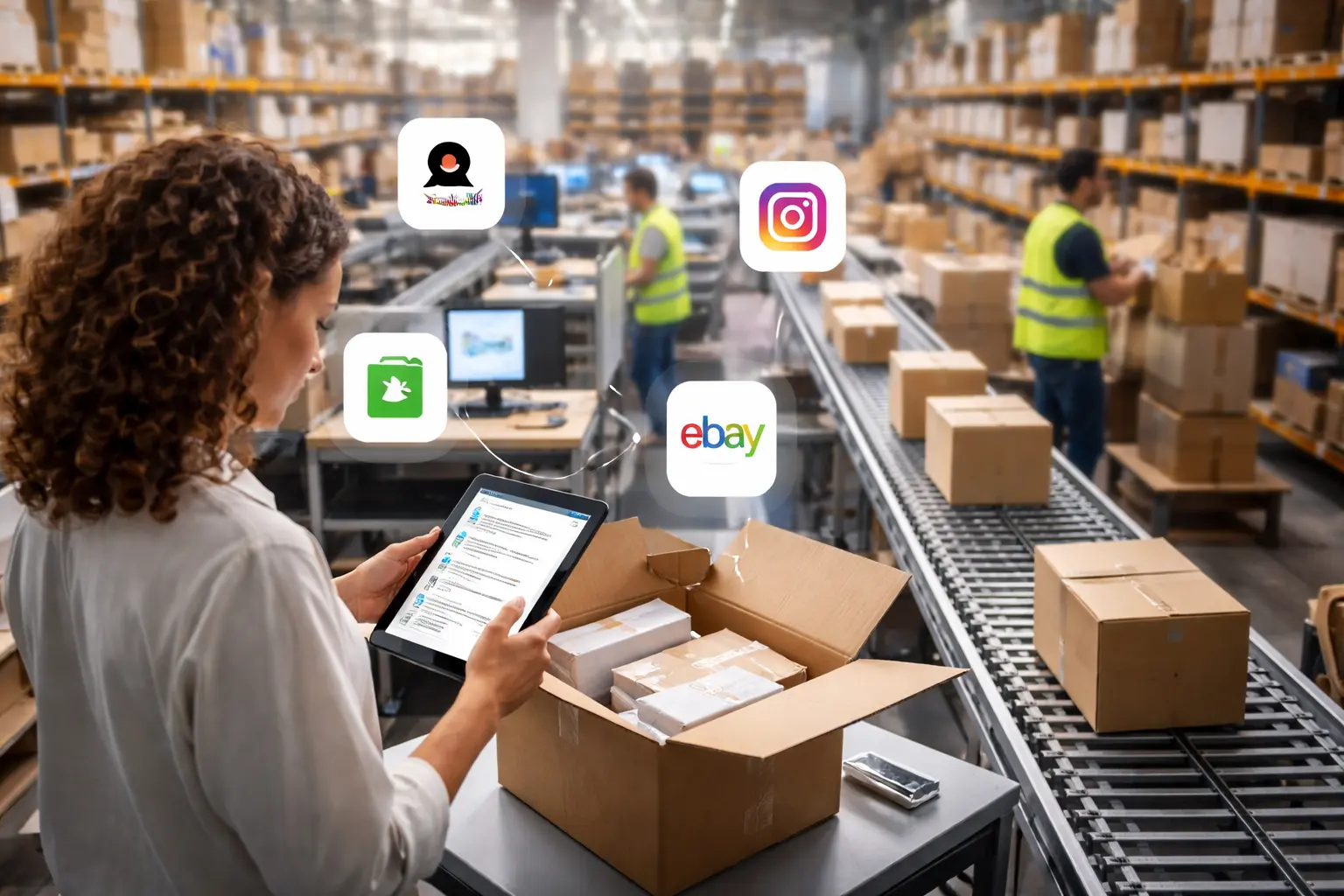
Modern warehouse management systems integrate directly with platforms like Shopify, WooCommerce, and Amazon, enabling real-time order syncing without manual data entry.
Step 3: Pick and Pack
This hands-on stage transforms digital orders into physical packages ready for shipping.
Picking: Warehouse staff receive pick lists directing them to specific locations where ordered items are stored. Picking methods vary based on order volume:
- Single order picking: One order fulfilled at a time (low volume)
- Batch picking: Multiple orders picked simultaneously (medium volume)
- Wave picking: Orders grouped by shipping deadline or carrier (high volume)
- Zone picking: Pickers assigned to specific warehouse areas (very high volume)
Packing: Once items are picked, they move to packing stations where staff:
- Verify correct items and quantities
- Select appropriate box or mailer size
- Add protective materials (bubble wrap, paper, air pillows)
- Include branded packaging elements like tissue paper, stickers, or thank-you cards
- Insert packing slips or promotional materials
- Seal packages securely
Quality pick and pack fulfillment maintains accuracy rates above 99.5%—critical for customer satisfaction and minimizing costly re-ships.
Step 4: Shipping
Packed orders move to the shipping stage where they’re labeled and handed off to carriers.
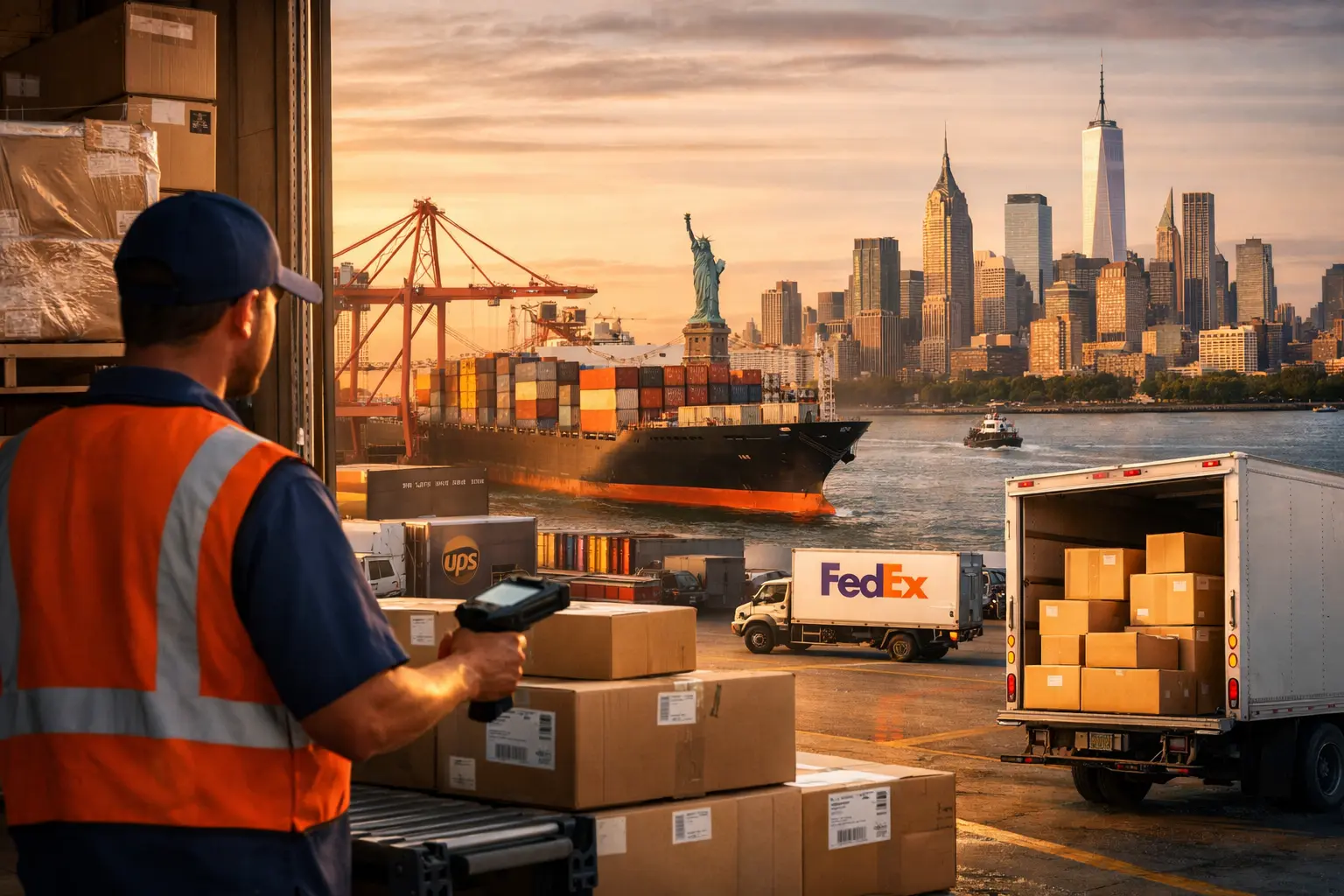
Shipping Process: – System selects optimal carrier based on destination, weight, and speed requirements – Shipping labels print automatically – Packages are sorted by carrier – Carrier pickups occur daily (or multiple times daily for high-volume operations) – Tracking information syncs back to your store and customer
DTC brands increasingly offer same-day and next-day shippingoptions. According to recent industry data, 68% of brands cite delivery delays as their top operational pain point, making shipping speed a competitive differentiator.
Step 5: Delivery and Post-Purchase
The customer experience doesn’t end when the package ships.
Post-Purchase Elements: – Proactive tracking notifications keep customers informed – Delivery confirmation triggers review requests – Returns and exchanges processing handles inevitable returns – Customer feedback loops improve future operations
Brands that excel at post-purchase communication see higher repeat purchase rates and stronger customer loyalty.
DTC Fulfillment Trends Shaping 2026
The direct-to-consumer fulfillment landscape continues evolving rapidly. Here’s what’s driving change in 2026.
AI-Powered Operations
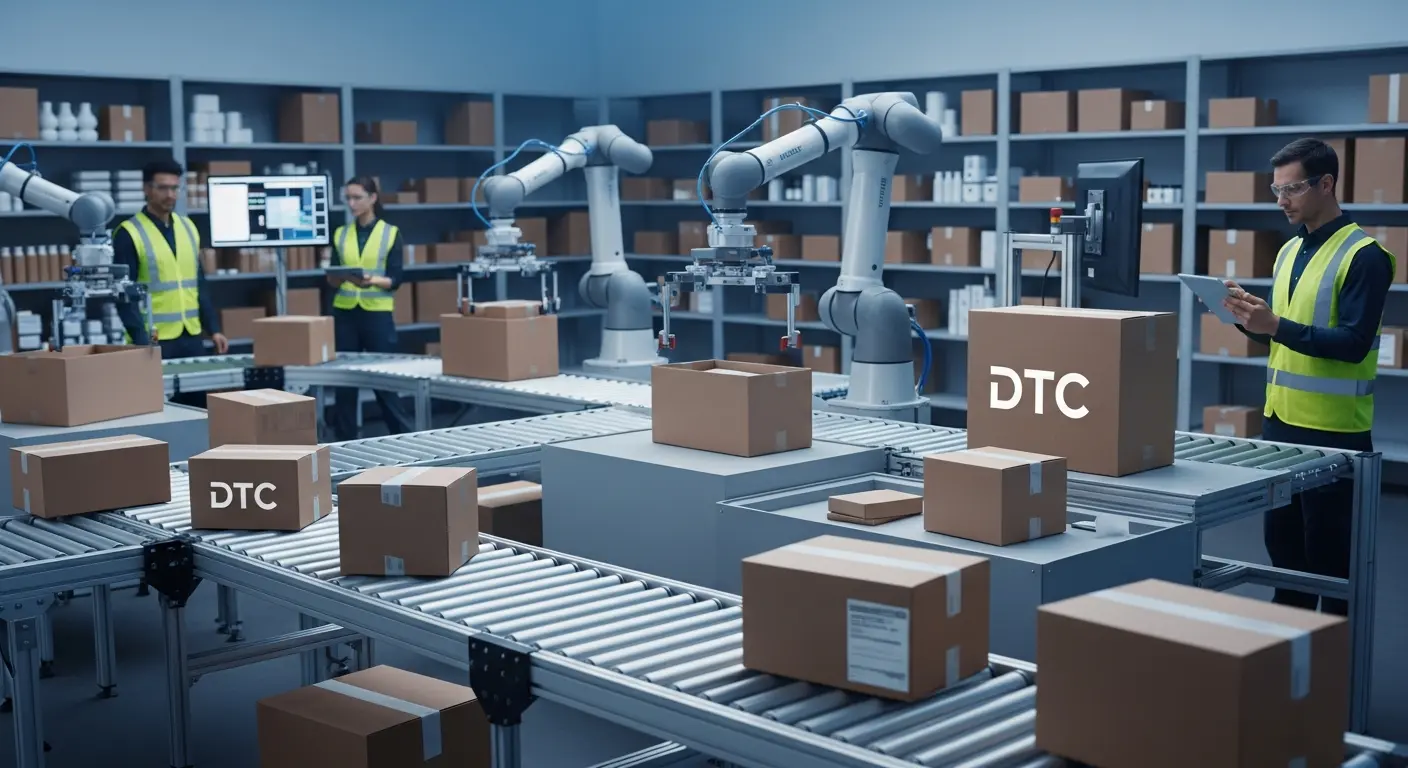
Artificial intelligence has moved from buzzword to operational necessity. Companies implementing AI-driven warehouse management systems report 35% increases in order processing speed and 20% reductions in logistics overhead costs.
AI applications in DTC fulfillment include:
- Demand forecasting: Predicting inventory needs before stockouts occur
- Inventory optimization: Data analytics leading to 45% decreases in stockouts and 30% increases in inventory turnover
- Carrier selection: Automatically choosing the best shipping option for each order
- Labor planning: Scheduling warehouse staff based on predicted order volumes
Omnichannel Fulfillment Integration
DTC no longer means online-only. Successful brands fulfill orders from multiple locations:
- Ship-from-store: Retail locations double as fulfillment centers
- Warehouse fulfillment: Traditional centralized distribution
- Drop shipping: Suppliers ship directly to customers
- Micro-fulfillment: Small urban facilities enable ultra-fast local delivery
Order management systems coordinate inventory across all channels, routing each order to the optimal fulfillment location.
Sustainable Fulfillment Practices
Consumers increasingly expect eco-friendly operations. DTC brands are responding with:
- Recyclable and biodegradable packaging materials
- Right-sized boxes that minimize waste and dimensional weight charges
- Carbon-neutral shipping options
- Consolidated shipments reducing transportation emissions
Growing 3PL Investment
More than 67% of brands, retailers, and 3PL companies are increasing their investments in DTC fulfillment, focusing on sustainable, profitable growth. The shift reflects recognition that fulfillment excellence drives customer retention and lifetime value.
In-House vs. 3PL: Choosing Your DTC Fulfillment Model
One of the biggest decisions for DTC brands is whether to handle fulfillment internally or outsource to a 3PL fulfillment warehouse.
In-House Fulfillment
Best for: Very early-stage brands, highly customized products, or those with existing warehouse infrastructure.
Advantages: – Complete control over operations – Direct oversight of quality – No third-party fees – Flexibility for custom processes
Challenges: – Requires capital investment in space and equipment – Staffing and training responsibilities – Technology systems must be purchased and maintained – Difficult to scale during peak periods – Distraction from core business activities
3PL Fulfillment
Best for: Growing brands, those with variable demand, or businesses wanting to focus on product and marketing.
Advantages: – Professional infrastructure without capital investment – Expertise in warehousing and distribution – Carrier relationships and shipping discounts – Scalability for seasonal peaks – Geographic reach through multiple locations
Challenges: – Less direct control over day-to-day operations – Monthly fees add to cost structure – Requires finding the right partner fit
The Build vs. Buy Calculation
The math typically works out to comparing in-house operations costs versus 3PL fees of $3-7 per order plus storage. Most analyses show 3PLs become cost-competitive at 3,000+ orders per month—though this varies based on product type, order complexity, and geography.
For small businesses and growing DTC brands, partnering with a 3PL often makes sense earlier than expected when factoring in opportunity costs of founder time spent packing boxes.
Key Components of Successful DTC Fulfillment
Whether you fulfill in-house or through a partner, certain elements determine success.
Technology Integration
Your fulfillment operation must connect seamlessly with:
- Ecommerce platforms: Shopify, WooCommerce, BigCommerce, Magento
- Marketplaces: Amazon, Walmart, eBay, Target Plus
- Inventory systems: Real-time stock visibility across channels
- Shipping software: Rate shopping and label generation
- Returns management: Streamlined reverse logistics
Integration eliminates manual data entry, reduces errors, and enables real-time visibility into operations.
Inventory Accuracy
Nothing kills a DTC brand faster than backorders and cancellations. Maintaining accurate inventory requires:
- Regular cycle counts
- Barcode scanning at every touchpoint
- Real-time inventory adjustments
- Safety stock calculations based on demand variability
- Vendor lead time tracking
Speed and Reliability
Customer expectations continue rising. In 2026, competitive DTC fulfillment means:
- Same-day processing for orders placed by cutoff times
- 2-day delivery to most of the continental US
- Accurate tracking information
- Consistent on-time delivery rates above 95%
Branded Experience
DTC fulfillment is a marketing channel. Every package reinforces (or undermines) your brand:
- Custom boxes or branded tape
- Tissue paper in brand colors
- Personalized packing slips
- Thank-you cards or promotional inserts
- Unboxing experience that encourages social sharing
Smart fulfillment builds stronger ecommerce brands by turning functional shipping into memorable customer moments.
Common DTC Fulfillment Challenges and Solutions
Challenge: Managing Inventory Across Multiple Channels
Selling on your website, Amazon, and wholesale simultaneously creates inventory complexity.
Solution: Implement a unified inventory management system that allocates stock across channels and automatically adjusts quantities as orders come in. Consider holding safety stock specifically for each channel to prevent overselling.
Challenge: Handling Returns Efficiently
DTC brands face return rates of 15-30% depending on product category.
Solution: Create clear return policies, provide prepaid return labels, and establish efficient processes for inspecting, restocking, or disposing of returned items. Track return reasons to identify product issues.
Challenge: Scaling for Peak Seasons
Holiday spikes can overwhelm fulfillment capacity.
Solution: Partner with a 3PL that has proven peak season experience, or develop a temporary staffing plan and additional warehouse space well before the rush begins.
Challenge: Controlling Shipping Costs
Shipping often represents the largest variable cost for DTC brands.
Solution: Negotiate carrier rates based on volume, use rate shopping software to select optimal carriers per shipment, offer free shipping thresholds that increase average order value, and position inventory in strategic locations to reduce zone distances.
Getting Started with DTC Fulfillment
Ready to optimize your direct-to-consumer fulfillment? Follow these steps:
- Audit current operations: Document order volumes, accuracy rates, shipping times, and costs
- Define requirements: List must-have capabilities and nice-to-have features
- Evaluate options: Compare in-house improvements versus 3PL partnerships
- Calculate total costs: Include hidden expenses like labor, technology, and opportunity costs
- Test before committing: Pilot new processes or 3PL relationships with limited inventory
- Measure and iterate: Track KPIs and continuously optimize
Direct-to-consumer fulfillment done right becomes a competitive advantage—driving customer satisfaction, repeat purchases, and sustainable growth. Done poorly, it creates frustrated customers and eroded margins.
The brands winning in 2026 treat fulfillment as a strategic function, not just an operational necessity. Whether you build internal capabilities or partner with experts in product fulfillment services, investing in fulfillment excellence pays dividends through every customer interaction.
![East Coast Order Fulfillment Provider: [Essential Guide]](https://shipcorefulfillment.com/wp-content/uploads/2026/02/east-coast-order-fulfillment-provider-500x383.webp)