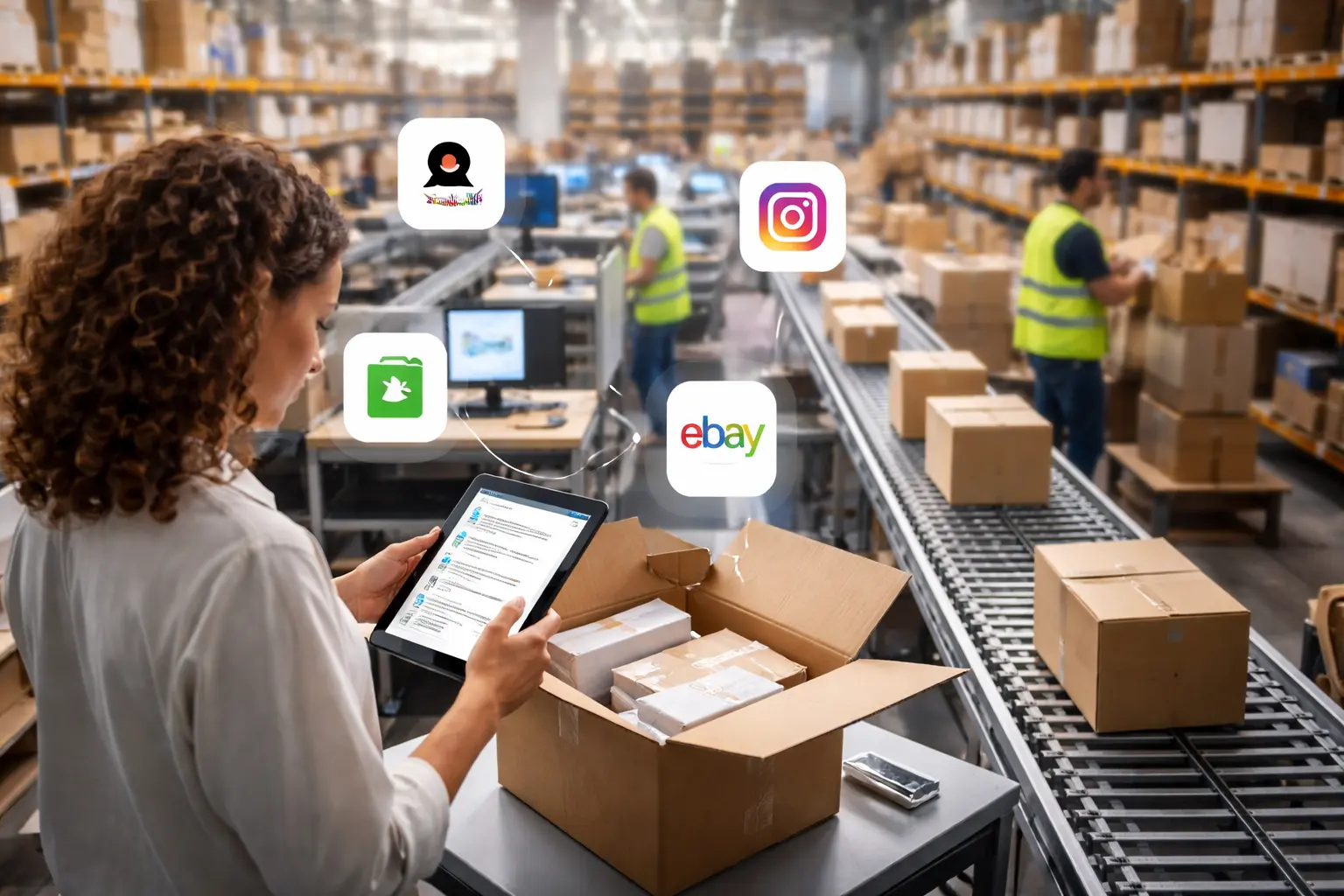

Choosing the best 3PL for small business operations is one of the most important decisions you’ll make as a growing ecommerce brand. The right fulfillment partner handles your inventory, ships your orders, and represents your brand to customers—all while you focus on product development and marketing.
But with hundreds of third-party logistics providers across the United States, how do you find one that actually understands small business needs? Many 3PLs cater primarily to enterprise clients, leaving smaller brands with poor service, hidden fees, and minimum order requirements they can’t meet.
This guide ranks the best fulfillment companies for small businesses based on pricing transparency, scalability, technology, and real-world performance. We’ve evaluated each provider specifically through the lens of what small business owners actually need.
What Makes a 3PL “Best” for Small Businesses?
Before diving into rankings, let’s establish what small businesses should prioritize when evaluating fulfillment services for small business operations.
No Prohibitive Minimums
Many large 3PLs require 500+ orders per month or thousands in monthly minimums. The best small business fulfillment services welcome brands shipping 50-100 orders monthly and grow with them.
Transparent Pricing
Hidden fees destroy small business margins. Look for providers with clear pricing on receiving, storage, pick and pack, and shipping—no surprises.
Personal Support
Small businesses can’t afford to be ticket #47,892 in a support queue. Direct access to account managers makes a significant difference.
Flexible Technology
Your 3PL should integrate with your existing platforms without forcing expensive custom development.
Scalability
Today you ship 100 orders monthly. Next year it might be 10,000. Your fulfillment partner should scale seamlessly in both directions.
Top 7 Best 3PL Providers for Small Business in 2026
1. ShipCore Fulfillment — Best Overall for Small Business
Location: Commerce, California (Los Angeles area) Best For:Growing DTC brands and ecommerce businesses seeking personalized service Website: shipcorefulfillment.com
ShipCore Fulfillment stands out as our top pick for small businesses because they’ve built their entire operation around the needs of growing brands rather than enterprise giants.
Why ShipCore Ranks #1:
- Family-owned with 10+ years of experience: Unlike faceless corporate 3PLs, ShipCore offers hands-on partnership with direct access to decision-makers
- No prohibitive minimums: They welcome small businesses and scale services as you grow
- Strategic West Coast location: Their Commerce, CA facility provides fast shipping to the entire Western United States and efficient port access for imported goods
- Comprehensive service suite: From warehousing and inventory management to same-day shipping, they handle every aspect of fulfillment
- Technology integrations: Native connections with Shopify, Amazon FBM, WooCommerce, Walmart, and Extensiv WMS
- Transparent pricing: Clear fee structures without hidden costs that erode your margins
Key Services: – E-commerce fulfillment with real-time order tracking – Pick and pack fulfillment with 99%+ accuracy rates – Custom branded packaging for enhanced unboxing experiences – Kitting and light assembly for subscription boxes and bundles – Returns and exchanges processing
Industries Served: Apparel, beauty and cosmetics, consumer electronics, health and wellness, food and specialty goods
Special Offer: New clients can save $2,500 in transfer fees and receive 30 days of free storage.
ShipCore’s relationship-driven approach means you’re working with a partner invested in your success, not just another account number. For small businesses that need reliability, personal attention, and room to grow, ShipCore delivers where larger providers fall short.
2. ShipBob
Location: Multiple fulfillment centers across the US Best For:Tech-forward brands prioritizing distributed inventory
ShipBob built their reputation on technology and multi-location fulfillment. Their platform offers strong analytics and inventory distribution tools.
Pros: – Nationwide fulfillment network – Strong technology platform – 2-day shipping coverage across most of the US
Cons: – Can become expensive at scale – Support quality varies by location – Some small businesses report feeling lost among larger clients
3. ShipMonk
Location: Multiple US locations Best For: Subscription box companies and high-SKU businesses
ShipMonk offers solid fulfillment services with particular strength in subscription fulfillment and complex kitting operations.
Pros: – Good subscription box capabilities – Reasonable pricing for mid-volume shippers – Multiple warehouse locations
Cons: – Minimum requirements may challenge very small businesses – Mixed reviews on customer service responsiveness – Technology platform has a learning curve
4. Deliverr (Shopify Fulfillment Network)
Location: Distributed network Best For: Shopify-native brands seeking marketplace badges
Now part of Shopify, Deliverr focuses on fast shipping badges for marketplaces and tight Shopify integration.
Pros: – Deep Shopify integration – Fast shipping badge eligibility – Simple pricing model
Cons: – Limited customization options – Less personal service – Primarily suited for Shopify sellers only
5. Red Stag Fulfillment
Location: Tennessee and Utah Best For: Heavy, oversized, or high-value products
Red Stag specializes in products that other 3PLs struggle with—heavy items, oversized packages, and high-value goods requiring extra security.
Pros: – Excellent for heavy/bulky items – Strong accuracy guarantees – Good for high-value inventory
Cons: – Limited to two locations – Not ideal for lightweight, standard products – Higher pricing for standard items
6. Fulfillment by Amazon (FBA)
Location: Amazon’s nationwide network Best For: Amazon-focused sellers prioritizing Prime eligibility
FBA remains popular for Amazon sellers who need Prime badges and don’t mind the associated constraints.
Pros: – Prime eligibility – Massive fulfillment network – Built-in Amazon customer base
Cons: – Expensive long-term storage fees – Limited branding options – Your customer data stays with Amazon – Not suitable for non-Amazon channels
7. ShipHero
Location: Multiple US facilities Best For: Brands wanting software flexibility with fulfillment options
ShipHero offers both fulfillment services and standalone warehouse management software, giving flexibility for different business models.
Pros: – Software-first approach – Good for brands considering in-house fulfillment eventually – Transparent pricing
Cons: – Smaller fulfillment network – Less established than competitors – May require more hands-on management
Comparison: Best Fulfillment Companies for Small Businesses
| Provider | Best For | Minimums | Small Business Focus | Personal Support |
| ShipCore Fulfillment | Growing DTC brands | Low/Flexible | Excellent | Direct access |
| ShipBob | Tech-focused brands | Moderate | Good | Varies |
| ShipMonk | Subscription boxes | Moderate | Good | Ticket-based |
| Deliverr/Shopify | Shopify sellers | Low | Moderate | Limited |
| Red Stag | Heavy/oversized items | Moderate | Good | Good |
| FBA | Amazon sellers | None | Poor | Minimal |
| ShipHero | Software-first brands | Moderate | Good | Good |
How to Choose the Right Fulfillment Center for Small Business
Selecting order fulfillment services for small business operations requires matching your specific needs with provider capabilities.
Evaluate Your Order Volume
Be honest about your current volume and realistic growth projections. Some 3PLs excel with 100 orders monthly while others need 1,000+ to provide good service levels.
Consider Your Product Type
Product characteristics matter significantly: – Lightweight items: Most 3PLs handle these well – Heavy or oversized: Consider specialists like Red Stag – Temperature-sensitive: Verify cold storage capabilities – High-value: Ensure adequate security and insurance
Map Your Customer Geography
Where do your customers live? If 60% of orders ship to the West Coast, a California-based fulfillment center like ShipCore makes strategic sense. For nationwide distribution, consider providers with multiple locations or position inventory based on your heaviest shipping zones.
Test Technology Integration
Before committing, verify that the 3PL integrates smoothly with your: – Ecommerce platform (Shopify, WooCommerce, BigCommerce) – Marketplaces (Amazon, Walmart, eBay) – Inventory management tools – Accounting software
Calculate True Costs
Request detailed quotes based on your actual order data. Include: – Receiving and inbound handling – Monthly storage fees – Pick, pack, and materials – Shipping costs – Account management fees – Returns processing
Many small businesses discover that the “cheapest” option becomes expensive once all fees are calculated.
Benefits of Outsourcing to a 3PL as a Small Business
Why should small businesses consider fulfillment for small businessthrough a 3PL rather than self-fulfillment?
Focus on Core Business Activities
Packing boxes doesn’t grow your brand. Outsourcing fulfillment frees time for product development, marketing, and customer acquisition—activities that actually drive revenue.
Access Professional Infrastructure
3PLs provide warehouse space, trained staff, shipping technology, and carrier relationships that would cost small businesses hundreds of thousands to replicate independently.
Scale Without Capital Investment
Need to handle Black Friday volume five times your normal rate? A good 3PL fulfillment warehouse absorbs these spikes without requiring you to lease additional space or hire seasonal workers.
Reduce Shipping Costs
3PLs aggregate shipping volume across clients, negotiating carrier rates that individual small businesses cannot access. These savings often offset fulfillment fees entirely.
Improve Customer Experience
Professional fulfillment means faster shipping, accurate orders, and proper packaging. This translates to better reviews, fewer support tickets, and higher customer lifetime value.
Red Flags When Evaluating Small Business Fulfillment Services
Watch for these warning signs when choosing fulfillment services for small business:
- Long-term contracts with penalties: Good 3PLs earn your business monthly
- Vague pricing: If they won’t provide detailed quotes, expect surprises
- No facility tours: Legitimate providers welcome visits
- Poor communication during sales: It only gets worse after signing
- No references from similar-sized businesses: They may not prioritize small clients
- Outdated technology: Integration headaches await
Getting Started with Small Business Fulfillment
Ready to explore fulfillment options? Follow this process:
- Document your requirements: Order volume, SKU count, product specs, shipping destinations
- Research 3-5 providers: Focus on those explicitly serving small businesses
- Request detailed quotes: Use your actual data for accurate comparisons
- Check references: Talk to current clients of similar size
- Tour facilities: See operations firsthand when possible
- Start with a pilot: Test with limited inventory before full transition
The best 3PL for small business is ultimately the one that treats your brand as a priority, scales with your growth, and delivers consistent results your customers notice.
For small businesses seeking a fulfillment partner that combines experience, technology, and genuine partnership, ShipCore Fulfillment offers the rare combination of enterprise-level capabilities with small business attention. Contact their team to discuss how they can support your growth.

![East Coast Order Fulfillment Provider: [Essential Guide]](https://shipcorefulfillment.com/wp-content/uploads/2026/02/east-coast-order-fulfillment-provider-500x383.webp)