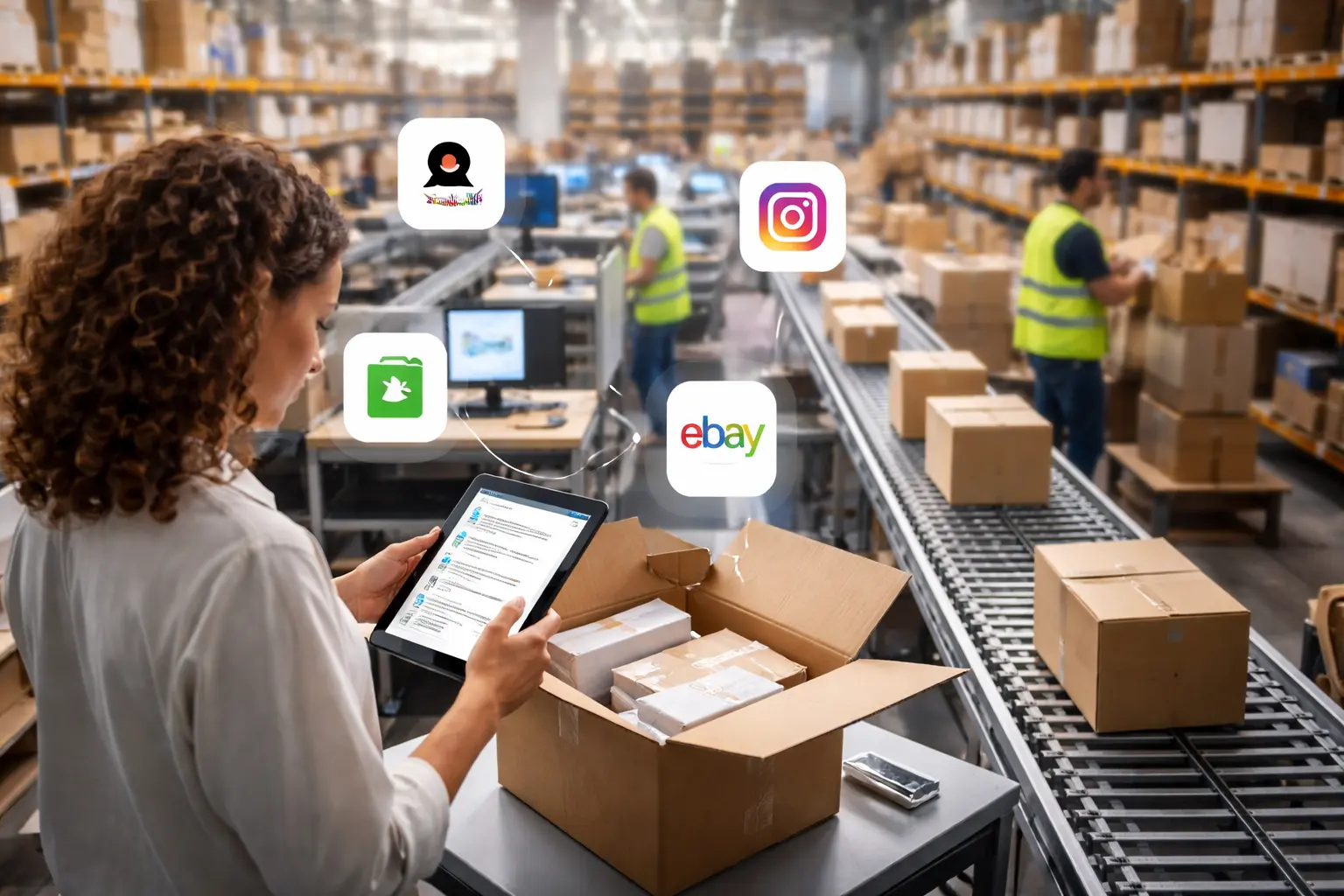

Running a small business means wearing many hats, but managing inventory, packing orders, and shipping products shouldn’t consume all your time. A fulfillment center for small business operations can transform how you handle logistics, freeing you to focus on growth and customer relationships. This guide explores everything you need to know about partnering with fulfillment centers to streamline your operations and scale efficiently.
What Is a Fulfillment Center?
A fulfillment center is a third-party warehouse facility that stores your inventory, processes orders, packs products, and ships them directly to your customers. Unlike traditional warehousing, fulfillment centers handle the entire order fulfillment process from start to finish.
For small businesses, this means outsourcing the time-consuming logistics operations that often bottleneck growth. Instead of managing storage space, hiring warehouse staff, and negotiating shipping rates, you partner with experts who specialize in getting products to customers quickly and accurately.
The right shipping fulfillment center operates as an extension of your business, integrating seamlessly with your e-commerce platform and providing real-time visibility into inventory levels and order status.
Why Small Businesses Need Product Fulfillment Centers
Small businesses face unique challenges when it comes to order fulfillment. You need the efficiency of larger operations without the overhead costs. Here’s why partnering with product fulfillment centers makes strategic sense:
Cost Efficiency Without Capital Investment
Building your own warehouse infrastructure requires significant upfront investment in real estate, equipment, staff, and technology. A distribution fulfillment center eliminates these capital expenses, converting them into predictable operational costs that scale with your sales volume.
You only pay for the space you actually use and the orders you fulfill. This variable cost structure protects your cash flow during slower periods while accommodating growth spurts without hiring additional staff or leasing larger facilities.
Access to Discounted Shipping Rates
One of the most significant advantages of working with established product fulfillment services is accessing volume-based shipping discounts. Fulfillment centers ship thousands of packages daily, giving them negotiating power with carriers that individual small businesses simply can’t match.
These savings often offset the fulfillment service fees, making the overall cost comparable to or even less than self-fulfillment while providing superior speed and reliability.
Professional Expertise and Technology
Modern fulfillment operations require sophisticated warehouse management systems, inventory tracking technology, and shipping software. Fulfillment centers invest in these technologies and the trained staff to operate them efficiently.
When you leverage e-commerce fulfillment services, you immediately gain access to enterprise-level capabilities without building them yourself. This includes barcode scanning, automated order routing, inventory optimization, and integrated tracking systems.
Scalability During Peak Seasons
Holiday seasons, promotional events, and unexpected viral moments can overwhelm small business operations. Shipping fulfillment centers are designed to handle volume fluctuations, with flexible staffing and proven processes for scaling operations quickly.
You won’t need to hire temporary workers, lease additional space, or stress about meeting delivery deadlines during your busiest periods. Your fulfillment partner manages these challenges while you focus on marketing and customer service.
How to Choose the Best Fulfillment Warehouse for Your Business
Not all fulfillment centers are created equal. Finding the right partner requires evaluating several critical factors that impact your customer experience and bottom line.
Location Strategy and Coverage
The location of your fulfillment center directly impacts shipping times and costs. If most customers are on the East Coast, partnering with fulfillment centers USA has strategically positioned facilities can reduce transit times from 5 days to 2 days.
Many growing businesses eventually use multiple locations to provide faster delivery nationwide. Start by analyzing where your customers are concentrated and choose a direct fulfillment center that minimizes the distance to your primary markets.
Integration Capabilities
Your fulfillment center must integrate seamlessly with your sales channels. Look for providers offering native integrations with platforms like Shopify, WooCommerce, Amazon, and others you use.
Real-time inventory synchronization prevents overselling, while automated order routing ensures orders flow directly to fulfillment without manual intervention. The best 3PL fulfillment warehouse partners offer robust API access for custom integrations if needed.
Pricing Transparency
Understanding fulfillment costs is crucial for maintaining healthy margins. Look for providers that clearly break down their fee structure:
- Receiving fees: Charges for accepting and processing incoming inventory
- Storage fees: Monthly costs based on space occupied (usually per cubic foot or pallet)
- Pick and pack fees: Per-order charges for retrieving items and preparing shipments
- Shipping costs: Actual carrier charges, sometimes marked up slightly
Beware of hidden fees for services like returns processing, special packaging, or inventory reporting. Reputable fulfillment companies near me will provide detailed pricing with no surprises.
Returns Management
Product returns are inevitable in e-commerce. Your fulfillment partner should offer comprehensive returns processing that inspects returned items, restocks sellable inventory, and handles damaged goods appropriately.
Clear returns workflows improve customer satisfaction while protecting your inventory accuracy and profitability.
Service Level Agreements
Define expectations upfront with clear service level agreements (SLAs). Key metrics to establish include:
- Order processing time (ideally same-day for orders received before a cutoff)
- Accuracy rates for picking and packing (should exceed 99.5%)
- On-time shipping performance
- Inventory accuracy
- Customer service response times
These guarantees ensure your fulfillment partner maintains the quality standards your customers expect.
Types of Fulfillment Models for Small Businesses
Different business models require different fulfillment approaches. Understanding your options helps you choose the right solution.
Traditional Third-Party Fulfillment
The most common model involves storing inventory at a fulfillment center that processes all your orders. This provides full-service support but requires shipping bulk inventory to the warehouse upfront.
This works well for businesses with predictable inventory turnover and established product lines. You maintain control over packaging and branding while outsourcing the logistics operations.
On-Demand Fulfillment
Some providers specialize in flexible, on-demand services that accommodate smaller inventory volumes and varying order patterns. These product fulfillment centers often cater specifically to small businesses and startups without minimum order requirements.
While per-unit costs may be slightly higher, you gain flexibility and avoid long-term commitments while testing new products or markets.
Hybrid Fulfillment
As you grow, you might adopt a hybrid approach—fulfilling some orders yourself (perhaps local or wholesale orders) while using a fulfillment center for direct-to-consumer e-commerce. This balances control, cost, and efficiency based on order characteristics.
Getting Started with Fulfillment Centers USA
Ready to partner with a fulfillment center? Here’s how to make the transition smooth and successful.
Step 1: Evaluate Your Current Operations
Before approaching providers, document your current fulfillment metrics:
- Average monthly order volume
- Average order value and items per order
- Peak season volume (highest month)
- Current fulfillment costs per order
- Average shipping time to customers
- Return rate and current handling process
This baseline helps you compare proposals and measure improvement after transitioning to professional warehousing and distribution services.
Step 2: Research and Compare Providers
Start your search for fulfillment companies near me by identifying providers serving your region. Request proposals from at least three providers, ensuring they have experience with businesses similar to yours in size and industry.
Ask for references from current clients and inquire about their technology platform, integration capabilities, and growth trajectory. Stability and reliability matter when choosing a long-term partner.
Step 3: Understand the Onboarding Process
Transitioning to a fulfillment center requires planning and coordination. Expect an onboarding period of 2-4 weeks involving:
- Creating product SKUs and uploading product information
- Configuring integrations with your e-commerce platform
- Establishing packing and shipping preferences
- Shipping initial inventory to the fulfillment center
- Testing order processing with sample orders
- Training your team on the new workflows
Quality fulfillment centers assign dedicated account managers to guide you through this process and address any challenges.
Step 4: Monitor Performance and Optimize
After launch, closely monitor key performance indicators for the first few months. Track order accuracy, shipping times, customer complaints, and actual costs compared to projections.
Regular communication with your fulfillment partner helps identify opportunities for improvement, whether that’s adjusting inventory levels, optimizing packaging, or refining shipping methods.
Common Challenges and How to Overcome Them
While partnering with a fulfillment center offers tremendous benefits, being aware of potential challenges helps you prepare solutions.
Inventory Visibility and Control
Relinquishing physical control of inventory can feel uncomfortable. Choose a provider offering real-time inventory management systems with online dashboards showing current stock levels, incoming shipments, and historical turnover.
Schedule regular inventory audits to verify accuracy and catch discrepancies early. Most fulfillment centers conduct cycle counts continuously to maintain precision.
Branding and Customer Experience
Your packaging represents your brand even when you don’t physically pack orders. Work with your fulfillment partner to ensure packaging aligns with your brand standards.
Many fulfillment centers offer custom packaging, branded inserts, and personalized touches like thank-you notes. While these services may cost extra, they maintain the customer experience you’ve worked hard to create.
Communication and Responsiveness
Clear communication channels are essential. Establish regular check-in calls with your account manager and ensure you have direct contacts for urgent issues.
Understanding your fulfillment center’s support hours and escalation procedures prevents frustration when time-sensitive problems arise.
Seasonal Inventory Planning
Running out of stock during peak season damages sales and reputation. Work proactively with your fulfillment partner to forecast inventory needs based on historical data and marketing plans.
Many best fulfillment warehouse providers offer inventory planning support, using their experience across multiple clients to anticipate seasonal patterns and recommend optimal stock levels.
The Future of Small Business Fulfillment
Technology continues transforming how small businesses handle logistics. Understanding emerging trends helps you stay competitive.
Same-Day and Next-Day Delivery Expectations
Consumer expectations increasingly demand faster delivery. While small businesses can’t compete with Amazon’s logistics network alone, partnering with strategically located shipping fulfillment centers makes same-day and next-day delivery achievable.
Multi-location fulfillment strategies position inventory closer to customers, reducing transit times without premium shipping costs.
Automation and Robotics
Leading fulfillment centers invest in automation technologies like robotic picking systems, automated sorting, and AI-powered inventory optimization. These innovations improve accuracy and speed while controlling labor costs.
As a small business partner, you benefit from these efficiency gains without making the capital investments yourself.
Sustainability Initiatives
Consumers increasingly value environmentally responsible business practices. Many fulfillment centers now offer sustainable packaging options, carbon-neutral shipping programs, and waste reduction initiatives.
Partnering with eco-conscious providers allows you to meet customer expectations for sustainability while focusing on your core products.
Take the Next Step with Professional Fulfillment
Choosing the right fulfillment center for small business operations is a strategic decision that impacts customer satisfaction, operational efficiency, and your ability to scale. The investment in a quality fulfillment partnership pays dividends through faster delivery, lower costs, and the time you reclaim to focus on growing your business.
Whether you’re shipping 50 orders monthly or 5,000, professional fulfillment services level the playing field against larger competitors while providing the flexibility small businesses need. By carefully evaluating providers, establishing clear expectations, and maintaining open communication, you create a partnership that supports your growth for years to come.
Ready to explore how a distribution fulfillment center can transform your operations? Start by documenting your current fulfillment metrics, identifying your primary challenges, and researching providers with proven small business expertise. The right partner is out there, ready to help you deliver exceptional experiences to every customer.
![East Coast Order Fulfillment Provider: [Essential Guide]](https://shipcorefulfillment.com/wp-content/uploads/2026/02/east-coast-order-fulfillment-provider-500x383.webp)